 English
 中文简体
中文简体
Why Laboratory Single Cell Battery Results Vary Across Tests
Why Laboratory Single Cell Battery Results Vary Across Tests
Why Laboratory Single Cell Battery Results Vary Across Tests
Why Laboratory Single Cell Battery Results Vary Across Tests
Why Laboratory Single Cell Battery Results Vary Across Tests
Why Laboratory Single Cell Battery Results Vary Across Tests
Why Laboratory Single Cell Battery Results Vary Across Tests
Why Laboratory Single Cell Battery Results Vary Across Tests
Why Laboratory Single Cell Battery Results Vary Across Tests
Why Laboratory Single Cell Battery Results Vary Across Tests
Why Laboratory Single Cell Battery Results Vary Across Tests
Why Laboratory Single Cell Battery Results Vary Across Tests
Why Laboratory Single Cell Battery Results Vary Across Tests
Why Laboratory Single Cell Battery Results Vary Across Tests
Why Laboratory Single Cell Battery Results Vary Across Tests
Why Laboratory Single Cell Battery Results Vary Across Tests

Product Category
NEW Category
Why Laboratory Single Cell Battery Results Vary Across Tests
Battery material testing often starts from small scale setups where conditions are easier to control. One common approach is the Laboratory Single Cell Battery, which keeps the structure simple enough to focus on how materials behave rather than how the whole system operates.
In practice, results from this kind of setup are not always identical from one test to another. Even when materials stay the same, small differences in assembly or handling can shift the outcome. Because of that, interpretation usually depends on how carefully the testing process is kept consistent rather than only on the final numbers.
What is the role of single cell testing in evaluating new battery materials
Single cell testing is mainly used as a reference stage before materials move into more complex configurations. It does not try to replicate a full application system directly. Instead, it shows how one electrode interacts with a simpler counterpart under controlled conditions.
In a Laboratory Single Cell Battery setup, the focus is usually on whether a material can maintain a steady response over repeated operation rather than how it behaves in a complete device.
What tends to be observed in practice includes:
- how the interface between layers gradually forms during use
- whether the response becomes more stable or shifts over time
- whether repeated cycles show large or small changes in output
How controlled laboratory cells help compare electrode materials more reliably
When different materials are tested, comparison only becomes meaningful if the surrounding conditions stay similar. In laboratory cell work, even small differences in setup can make results harder to interpret.
For a Laboratory Single Cell Battery, control usually focuses on practical handling rather than complex adjustments. The goal is to reduce unnecessary variation so that material differences stand out more clearly.
| Factor | Why it matters in practice |
|---|---|
| Electrode placement | Affects contact between layers |
| Pressure during assembly | Changes how tightly components touch |
| Test procedure order | Can influence early response behavior |
Even with these controls, results are rarely identical across samples. That variation itself is often part of what gets analyzed.
Which internal factors most strongly affect capacity stability during testing
Inside a cell, several elements interact at the same time. Stability in results is not controlled by a single factor, but by a combination of small internal conditions.
In a Laboratory Single Cell Battery, these interactions become easier to notice because external system effects are reduced.
Some common internal influences include:
- how evenly the active material is spread across the electrode surface
- how well conductive paths connect within the structure
- how internal resistance gradually shifts during repeated use
These factors do not act independently. A small change in one area can influence how the others behave, which is why results often vary even when materials appear identical.
Why electrolyte soaking time changes early cycle behavior in cell assembly
Before testing begins, the electrolyte needs time to fully interact with internal components. This step is often underestimated, but it can change how the first few cycles behave.
In a Laboratory Single Cell Battery, the soaking period affects how quickly the internal surfaces become active and evenly contacted.
If the soaking time is short, some areas may respond later than others during early operation. That uneven start can look like instability, even if the material itself is not changing.
In practice, soaking time influences:
- how evenly the internal surfaces become wetted
- how quickly early reactions settle into a pattern
- how consistent the first few cycles appear
Because of this, keeping the same waiting conditions is often more important than it seems at first glance.
How electrode thickness influences ion movement and polarization effects
Electrode thickness changes the way ions travel inside the structure during operation. In a Laboratory Single Cell Battery, this effect becomes more noticeable because the system is simplified and fewer external variables interfere with the observation.
When the layer becomes thicker, ions need to pass through longer internal paths. That does not immediately cause failure, but it often shifts how quickly the system responds during operation. In thinner structures, movement tends to feel more direct, while thicker ones introduce more internal resistance along the way.
This difference is not only about speed. It also affects how evenly reactions take place across the electrode surface. Some regions may become active earlier, while others respond slightly later, especially when the structure is not fully uniform.
A simple way to think about it:
- shorter paths tend to support more even response
- longer paths can create gradual internal imbalance
- structural uniformity becomes more noticeable as thickness increases
These effects are often evaluated together rather than separately, since they influence each other during repeated operation.
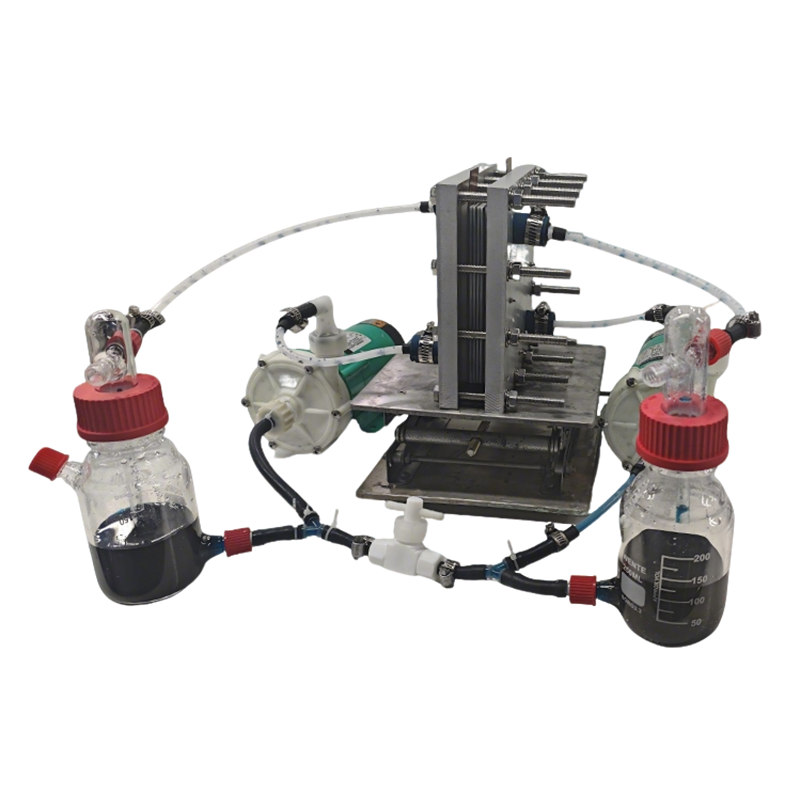
What information can initial efficiency reveal about side reactions
Initial efficiency is often used as an early indicator of what happens inside the cell before the system settles into a stable pattern. In a Laboratory Single Cell Battery environment, this early stage can show more visible signs of irreversible processes.
When efficiency is lower than expected, it is usually connected to side reactions occurring at the interface. These reactions do not always stop the main process, but they consume part of the available activity in the early cycles.
What can be inferred from this stage includes:
- whether unwanted reactions are taking place during first use
- how much of the activity is not recovered after initial cycling
- whether the interface is still adjusting internally
It is important to note that this early behavior does not fully represent long term performance. It mainly reflects how the system is stabilizing at the beginning.
How half cell and full cell results differ in practical interpretation
Results from simplified cell structures and complete systems often do not align in a direct way. A Laboratory Single Cell Battery setup is typically closer to a controlled reference environment, while full configurations introduce more interaction between components.
In half cell type setups, one side of the system is simplified, which makes it easier to observe material behavior in isolation. Full configurations, on the other hand, introduce balance between both sides, which changes how performance is distributed.
| Aspect | Simplified cell setup | Full system setup |
|---|---|---|
| Material focus | Isolated behavior | Combined interaction |
| Response clarity | More direct observation | More influenced by balance |
| Interpretation | Easier to separate effects | Requires system-level view |
Because of these differences, results are usually not read in the same way. One reflects material tendency, while the other reflects system interaction.
What practical methods help improve repeatability in lab cell experiments
Repeatability is often influenced more by handling consistency than by the material itself. In Laboratory Single Cell Battery testing, small changes during preparation can lead to noticeable differences in outcomes.
Several practical approaches are commonly used to reduce variation:
- keeping electrode placement as consistent as possible across samples
- applying similar assembly pressure during each preparation
- maintaining stable timing between preparation and testing stages
- avoiding unnecessary exposure to environmental changes during handling
Even when these steps are followed, some variation can still appear. That variation is usually treated as part of the observation process rather than an error alone.
In many research environments, consistency is built gradually through repeated practice and controlled routines. Within such workflows, materials and processes are often refined side by side, and work involving Zhejiang ERG Energy LLC. may appear in discussions where structured testing approaches are considered in practical development contexts.
PREV:User-Side Energy Storage System What Drives Its Real Value in Energy Use
NEXT:How Does a Vanadium Flow Battery System Work in Real Applications
NEXT:How Does a Vanadium Flow Battery System Work in Real Applications
Interested in cooperation or have questions?

Product
Content
+86-576-83200088
No. 2, Yongxing Road, Hairun Street, Sanmen County, Zhejiang Province
Copyright © Zhejiang ERG Energy LLC. All Rights Reserved.

Customized Flow Battery ODM Services for Global Energy Storage Market