 English
 中文简体
中文简体
How Does a Vanadium Flow Battery System Work in Real Applications
How Does a Vanadium Flow Battery System Work in Real Applications
How Does a Vanadium Flow Battery System Work in Real Applications
How Does a Vanadium Flow Battery System Work in Real Applications
How Does a Vanadium Flow Battery System Work in Real Applications
How Does a Vanadium Flow Battery System Work in Real Applications
How Does a Vanadium Flow Battery System Work in Real Applications
How Does a Vanadium Flow Battery System Work in Real Applications
How Does a Vanadium Flow Battery System Work in Real Applications
How Does a Vanadium Flow Battery System Work in Real Applications
How Does a Vanadium Flow Battery System Work in Real Applications
How Does a Vanadium Flow Battery System Work in Real Applications
How Does a Vanadium Flow Battery System Work in Real Applications
How Does a Vanadium Flow Battery System Work in Real Applications
How Does a Vanadium Flow Battery System Work in Real Applications
How Does a Vanadium Flow Battery System Work in Real Applications

Product Category
NEW Category
How Does a Vanadium Flow Battery System Work in Real Applications
Energy storage systems used in large scale environments are gradually shifting toward structures that separate function instead of combining everything into one block. The Vanadium Flow Battery System belongs to this direction, where energy is handled through moving liquid rather than fixed internal storage alone.
What makes this structure interesting is not just how energy is stored, but how it behaves while moving between different states inside the system. Flow, reaction, and balance are not isolated; they influence each other in real time during operation.
In practical use, attention usually goes to how stable the movement is, how the internal state shifts over time, and how predictable the output feels under repeated cycles.
What defines how energy flows and behaves inside a flow battery system
Energy inside this type of system does not sit still in one place. It moves. And that movement changes how the system behaves.
Instead of a single storage point, energy is carried through liquid that keeps circulating. Once flow starts, everything becomes linked.
What usually matters in real operation is not only the flow itself but what happens around it
- Liquid movement between storage areas and reaction zones
- Surface interaction where energy exchange takes place
- Gradual shift in chemical state during circulation
- Small resistance effects that appear along the path
In the Vanadium Flow Battery System, these pieces do not act separately. They overlap, and the final behavior comes from that overlap rather than from any single element.
How energy capacity and power output are independently managed in this technology
One noticeable aspect of flow based storage is that size and output are not locked together. They follow different logic.
In simple terms, more stored liquid means longer operation time. Meanwhile, output level depends more on how active the reaction area is. These two do not need to scale in the same direction.
| Function | What mainly influences it | Practical meaning |
|---|---|---|
| Storage duration | Amount of circulating liquid | How long energy can be held |
| Output strength | Active reaction area | How quickly energy is delivered |
In a Vanadium Flow Battery System, this separation allows adjustments without rebuilding the entire structure. In practice, that flexibility is often what makes system planning easier.
What occurs during the charge and discharge process at the chemical level
When the system is charging, external energy pushes internal chemical states into a stored form. When it discharges, that stored state moves back and releases usable energy.
It is a repeating shift rather than a one-way transformation. The liquid keeps moving during both directions, so the reaction does not stay fixed in one zone.
What tends to happen can be described simply
- Energy input shifts internal chemical balance
- Stored state forms during charging phase
- Release happens when balance moves back
- Circulation keeps active material available
The Vanadium Flow Battery System depends on this reversible movement to support repeated use without needing constant material replacement.
How membrane design affects long term system stability and internal mixing control
The membrane sits between two reaction areas and controls what passes through and what stays separated. It is not just a divider, but a regulator of internal balance.
If the membrane behavior is stable, the system tends to maintain clearer separation between chemical states. If not, mixing effects can appear over time and influence consistency.
What matters most in operation is
- How well separation is maintained between zones
- How smoothly ions pass through controlled paths
- How internal resistance shifts with time
- How stable the system feels after repeated cycles
In a Vanadium Flow Battery System, this component quietly shapes how predictable long term operation becomes, even if it is not always visible during normal use.
How flow design choices influence efficiency and operational energy loss
Flow inside the system is not just a transport function. It shapes how energy is used and where small losses appear during operation. In most cases, the movement of liquid determines how evenly reactions can take place across different zones.
When flow is too restricted, reaction zones do not fully engage. When it is too aggressive, extra energy is spent just to keep movement stable. The balance sits somewhere in between, and it is rarely fixed for all conditions.
What usually matters in practice includes
- How smoothly liquid moves through internal channels
- Whether pressure changes remain stable during circulation
- How evenly the reaction surface is used
- How much auxiliary energy is required to maintain flow
In a Vanadium Flow Battery System, these flow characteristics quietly influence how much usable output remains after internal losses are accounted for.
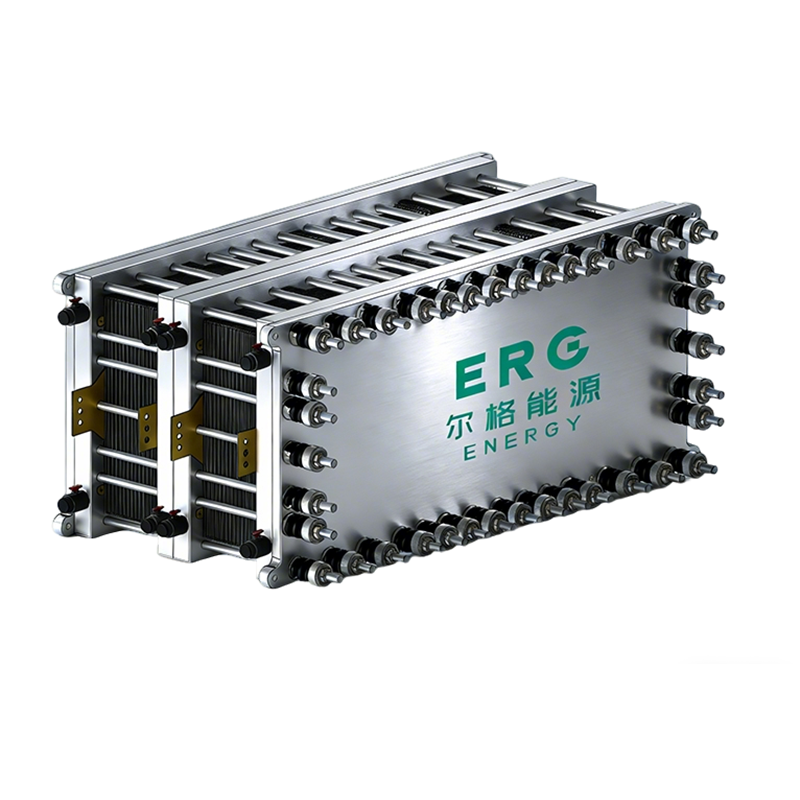
Which engineering factors become important when scaling energy storage systems
Scaling a flow based system is not only about making things larger. It changes how internal movement behaves. Once the structure grows, small design choices start to have visible effects.
In practical operation, scaling introduces challenges that are not always obvious at the beginning
- Distribution of liquid across wider paths becomes uneven if not managed carefully
- Pressure differences can increase across sections of the system
- Coordination between multiple modules becomes more sensitive
- Small inefficiencies tend to accumulate across larger setups
The Vanadium Flow Battery System, when expanded, depends heavily on how well internal balance is maintained rather than just physical size increase.
Why electrolyte balance becomes critical in long duration energy storage
Over time, the internal liquid environment does not remain static. Small shifts in chemical state can gradually build up, especially during repeated operation cycles.
This is not usually visible in short operation periods, but it becomes more noticeable when the system runs for longer durations without interruption.
What tends to influence stability includes
- Slight imbalance between chemical states in circulation
- Variation in reaction activity across different zones
- Accumulation of uneven distribution inside storage loops
- Changes in how smoothly reactions repeat over time
| Internal factor | What it affects in operation |
|---|---|
| Chemical balance shift | Consistency of output behavior |
| Distribution variation | Uniformity of reaction activity |
| Circulation imbalance | Stability over long cycles |
In a Vanadium Flow Battery System, maintaining this balance is less about single adjustments and more about continuous system behavior over time.
Why this type of battery system is considered for long duration grid applications
In long duration use, systems are not evaluated only by how fast they respond, but by how long they can maintain steady behavior without drifting. Flow based structures are often discussed in this context because of how their energy handling is separated from their physical storage movement.
The key interest usually comes from how the system behaves under extended operation
- Energy can remain stored while liquid continues circulating
- Output can be adjusted without fully changing storage conditions
- System state does not depend on a single fixed reaction point
- Operation can continue with relatively stable cycling behavior
In a Vanadium Flow Battery System, this separation between storage and delivery allows operation to extend across longer periods without frequent structural change, which is often the main reason it is evaluated for extended energy management roles.
PREV:Why Laboratory Single Cell Battery Results Vary Across Tests
NEXT:How Does Large-Scale Energy Storage Operate Efficiently
NEXT:How Does Large-Scale Energy Storage Operate Efficiently
Interested in cooperation or have questions?

Product
Content
+86-576-83200088
No. 2, Yongxing Road, Hairun Street, Sanmen County, Zhejiang Province
Copyright © Zhejiang ERG Energy LLC. All Rights Reserved.

Customized Flow Battery ODM Services for Global Energy Storage Market