 English
 中文简体
中文简体
Why Do Laboratory-Scale Vanadium Flow Battery Cells Vary
Why Do Laboratory-Scale Vanadium Flow Battery Cells Vary
Why Do Laboratory-Scale Vanadium Flow Battery Cells Vary
Why Do Laboratory-Scale Vanadium Flow Battery Cells Vary
Why Do Laboratory-Scale Vanadium Flow Battery Cells Vary
Why Do Laboratory-Scale Vanadium Flow Battery Cells Vary
Why Do Laboratory-Scale Vanadium Flow Battery Cells Vary
Why Do Laboratory-Scale Vanadium Flow Battery Cells Vary
Why Do Laboratory-Scale Vanadium Flow Battery Cells Vary
Why Do Laboratory-Scale Vanadium Flow Battery Cells Vary
Why Do Laboratory-Scale Vanadium Flow Battery Cells Vary
Why Do Laboratory-Scale Vanadium Flow Battery Cells Vary
Why Do Laboratory-Scale Vanadium Flow Battery Cells Vary
Why Do Laboratory-Scale Vanadium Flow Battery Cells Vary
Why Do Laboratory-Scale Vanadium Flow Battery Cells Vary
Why Do Laboratory-Scale Vanadium Flow Battery Cells Vary

Product Category
NEW Category
Why Do Laboratory-Scale Vanadium Flow Battery Cells Vary
Capacity results from flow battery testing do not always remain the same from one test to another. Two cells can use similar materials and follow a similar procedure, yet the recorded capacity may still change. The reason is often not a single component. Small differences in electrolyte condition, liquid circulation, electrode preparation, membrane condition, or cell assembly can accumulate during testing.
For laboratories using Laboratory-Scale Vanadium Flow Battery Cells, this makes the testing setup just as important as the cell itself. Looking only at the final capacity value can make troubleshooting difficult. The conditions before and during the test provide useful clues about where a difference may have started.
How Do Initial Testing Conditions Affect Capacity Results in Laboratory-Scale Vanadium Flow Battery Cells
A capacity test begins before the charging equipment is switched on. The condition of the cell and electrolyte at that point becomes part of the test.
For example, a cell that has recently completed another cycle may not be in the same condition as a freshly prepared cell. Some electrolyte may remain in the circulation path, while the electrode may also have a different wetting state. Even the time spent preparing the cell can differ between test sessions.
For this reason, the preparation stage deserves its own record. It gives researchers something to refer back to when two results do not match.
Useful checks include:
- Confirming the condition of the electrolyte before testing
- Checking the circulation path and connections
- Reviewing whether the cell has been used previously
- Recording changes made during preparation
- Making sure the electrode and membrane are positioned consistently
| Preparation area | What may change between tests |
|---|---|
| Electrolyte condition | Starting condition of the test |
| Cell history | Condition of previously used components |
| Circulation path | Initial liquid movement |
| Electrode preparation | Contact between liquid and electrode |
Without these details, a difference in capacity can be difficult to trace. Keeping the preparation process consistent reduces one source of uncertainty before other factors are examined.
How Does Electrolyte Flow Rate Affect Capacity Results in Laboratory-Scale Vanadium Flow Battery Cells
The electrolyte has to move continuously between the reservoirs and the cell. A change in that movement can alter what happens inside the electrode area.
The cause is not necessarily the pump itself. Tubing resistance, a partially restricted connection, a change in tube position, or an unstable pumping condition can all affect circulation. A setup that appears unchanged from the outside may therefore behave differently during operation.
Flow-related problems are sometimes easier to spot by watching the system rather than looking only at the recorded capacity. Irregular liquid movement, unexpected changes in pumping behavior, or air entering the circulation path can provide useful clues.
When investigating a difference, it is practical to check:
- Tubing connections and their position
- Pump operation during the test
- Liquid movement through both circulation paths
- Signs of air entering the system
- Whether the same circulation arrangement was used in earlier tests
The flow path also matters. Electrolyte movement through a small cell depends on the relationship between the pump, tubing, flow plates, and electrode structure. A change in any part of that path may show up later as a difference in the test result.
What Causes Electrolyte Imbalance in Laboratory-Scale Vanadium Flow Battery Cells During Repeated Testing
The two electrolyte circuits do not remain completely isolated from one another during operation. Changes can occur as ions move through the membrane, while repeated cycling can also alter the condition of the solutions.
Electrolyte imbalance may become noticeable when capacity begins to change over repeated tests. However, the recorded capacity alone does not identify the cause. Liquid transfer, changes in solution condition, or differences in the starting state may all produce similar symptoms.
Checking both sides of the system is therefore important. Looking at only one reservoir can leave part of the problem unexplained.
Particular attention can be given to:
- Changes in the condition of either electrolyte solution
- Possible liquid loss or transfer
- Differences between the two circulation circuits
- The operating history of the electrolyte
- Changes that appeared after repeated charging and discharging
Electrolyte preparation and handling should be recorded alongside the test results. When an unexpected capacity change appears, these records can help determine whether the issue began with the cell or with the solution being circulated through it.
How Do Membrane Properties Affect Capacity Results in Laboratory-Scale Vanadium Flow Battery Cells
The membrane sits between the two electrolyte circuits and controls the movement of ions between them. Its condition can therefore have a direct bearing on how the cell behaves during operation.
Membrane material, thickness, physical condition, and interaction with the electrolyte are all relevant. A membrane that allows unwanted ion transfer can gradually alter the balance between the two sides. Changes in internal resistance may also influence the voltage behavior observed during a test.
Handling is another consideration. The membrane can be affected during cutting, positioning, cleaning, storage, and assembly. A material that was in good condition before installation may not be in exactly the same condition after repeated handling.
| Membrane consideration | Why it matters during testing |
|---|---|
| Material condition | Can influence ion movement between the two sides |
| Thickness | Can influence internal resistance and transport |
| Handling | May change the physical condition of the membrane |
| Electrolyte compatibility | Relates to the membrane's operating environment |
When a capacity result changes, the membrane should be considered together with electrolyte condition and the other cell components. Capacity alone is rarely enough to identify a membrane-related problem.
Which Carbon Electrode Properties Influence Capacity Results in Laboratory-Scale Vanadium Flow Battery Cells
The electrode provides the surface where the electrochemical reactions take place. Small differences in the material can change how the electrolyte reaches and interacts with that surface.
Carbon felt is one example of an electrode material used in flow battery testing. Its thickness, pore structure, surface condition, and ability to absorb the electrolyte can vary. These properties affect the contact between the liquid and the active surface.
Two electrode samples may look similar when placed side by side but behave differently once installed in a cell. Uneven wetting or differences in material structure can change the way electrolyte passes through the electrode.
When comparing electrode samples, it is useful to keep track of:
- Physical dimensions
- Surface condition
- Wetting behavior
- Material consistency
- Position inside the cell
The electrode also works in combination with the membrane and flow structure. A capacity difference should therefore not automatically be attributed to the electrode material without checking the surrounding conditions.
How Does Electrode Pretreatment Affect Capacity Results in Laboratory-Scale Vanadium Flow Battery Cells
An electrode does not necessarily begin a test in the same condition in which it was received. Cleaning, wetting, surface treatment, and other preparation steps can change how the material interacts with the electrolyte.
The preparation itself is only part of the picture. What happens afterward matters as well. An electrode may be handled differently during installation, stored for a different period, or exposed to a different environment before the cell is assembled.
These details can become important when two tests use nominally similar electrode samples but produce different capacity results.
A practical record can include:
- The preparation method used
- The condition of the electrode after treatment
- How the material was handled before assembly
- Whether the same preparation procedure was followed
- Any visible change in the electrode before testing
Keeping this history makes later comparisons easier. If a capacity difference appears after changing the electrode preparation process, the connection between the preparation step and the test result can be examined more closely.
What Causes Assembly Differences in Laboratory-Scale Vanadium Flow Battery Cells During Capacity Testing
Assembly is another source of variation that can be easy to overlook. The membrane, electrodes, gaskets, flow plates, and other parts have to sit in the intended positions before the cell is secured.
A small shift in one component can affect the contact area or alter the path taken by the electrolyte. Uneven compression around the cell may also create sealing problems. In some cases, the cell may continue operating even though the assembly is not identical to an earlier test.
This is why visual inspection before operation can be useful. The objective is not simply to check whether all components are present, but to confirm that they are positioned consistently.
The assembly check can cover:
- Membrane alignment
- Electrode position
- Gasket placement
- Contact surfaces
- Tightening consistency
- Signs of leakage after circulation begins
When two capacity results differ, comparing their assembly records may reveal a difference that is not apparent from the test data alone.
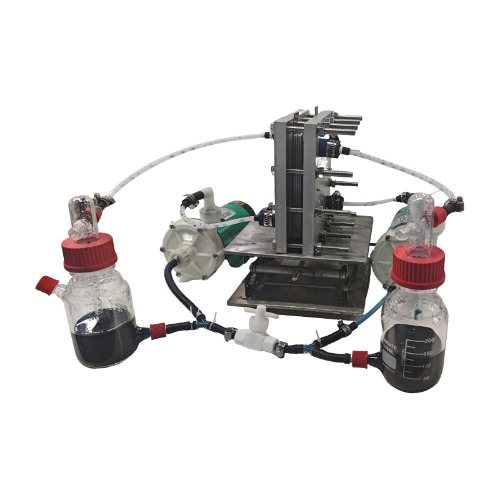
How Can Capacity Differences Be Traced to Specific Testing Problems in Laboratory-Scale Vanadium Flow Battery Cells
Troubleshooting becomes easier when the investigation follows the sequence of the test. Instead of replacing components immediately, researchers can look at when the difference appeared and what changed around that point.
Suppose the circulation behavior changed before the capacity difference appeared. The flow system then becomes a reasonable area for inspection. If the difference followed a change in electrode preparation, the electrode history deserves closer attention.
The same approach can be applied to the membrane, electrolyte, and assembly process.
A useful troubleshooting sequence is:
- Review the preparation record
- Check the electrolyte condition
- Inspect the circulation path
- Examine electrode and membrane installation
- Compare the operating procedure
- Repeat the relevant check if the difference remains
This approach helps separate several possible causes that may otherwise look similar in the final result. It also reduces the risk of treating every capacity change as a material problem.
How Should Laboratory-Scale Vanadium Flow Battery Cell Test Results Be Compared Across Different Experimental Setups
Results from different setups should be compared with their testing conditions in view. A capacity value has limited meaning when the cell preparation, electrolyte condition, electrode treatment, or circulation arrangement has changed at the same time.
For example, changing an electrode and changing the flow condition during the same test makes it difficult to determine which change influenced the result. Keeping the relevant conditions stable allows a specific variable to be examined without introducing several new sources of variation.
A comparison record can therefore separate the cell itself from the conditions surrounding it.
| Comparison area | Points to check |
|---|---|
| Cell assembly | Component position and contact condition |
| Electrolyte | Preparation and operating condition |
| Circulation | Pumping and liquid movement |
| Electrode | Material condition and pretreatment |
| Membrane | Material and physical condition |
| Test procedure | Preparation and operating steps |
For Laboratory-Scale Vanadium Flow Battery Cells, differences in capacity are often easier to investigate when the complete testing environment is considered. The electrolyte, circulation system, membrane, electrode, assembly, and preparation process are connected. Looking at these factors separately and then checking how they interact provides a clearer path for interpreting variations between tests.
Interested in cooperation or have questions?

Product
Content
+86-576-83200088
No. 2, Yongxing Road, Hairun Street, Sanmen County, Zhejiang Province
Copyright © Zhejiang ERG Energy LLC. All Rights Reserved.

Customized Flow Battery ODM Services for Global Energy Storage Market