 English
 中文简体
中文简体
How Do Flow Battery Stacks Support Grid Storage?
How Do Flow Battery Stacks Support Grid Storage?
How Do Flow Battery Stacks Support Grid Storage?
How Do Flow Battery Stacks Support Grid Storage?
How Do Flow Battery Stacks Support Grid Storage?
How Do Flow Battery Stacks Support Grid Storage?
How Do Flow Battery Stacks Support Grid Storage?
How Do Flow Battery Stacks Support Grid Storage?
How Do Flow Battery Stacks Support Grid Storage?
How Do Flow Battery Stacks Support Grid Storage?
How Do Flow Battery Stacks Support Grid Storage?
How Do Flow Battery Stacks Support Grid Storage?
How Do Flow Battery Stacks Support Grid Storage?
How Do Flow Battery Stacks Support Grid Storage?
How Do Flow Battery Stacks Support Grid Storage?
How Do Flow Battery Stacks Support Grid Storage?

Product Category
NEW Category
How Do Flow Battery Stacks Support Grid Storage?
Electricity does not always need to be used at the same moment it is generated. As power systems incorporate more renewable generation, there can be periods when electricity is available while demand follows a different pattern.
Energy storage provides a way to move that electricity to another point in time. Within a flow battery system, Flow Battery Stacks support the electrochemical process that allows stored energy to be converted between chemical and electrical forms. Understanding their role also requires looking at the electrolyte, circulation system, and other components that work together as part of the storage system.
What Are Flow Battery Stacks
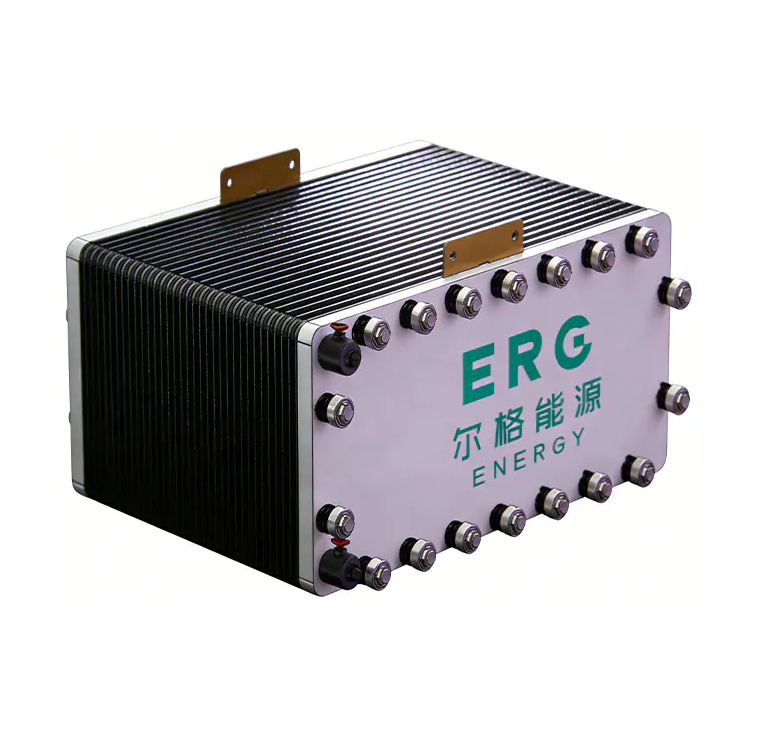
A flow battery stack is simply the part of the system where the electrochemical reactions actually happen. Multiple individual cells are assembled into a single unit so that electrical energy can be converted into chemical energy and back again under controlled conditions.
In a conventional battery the active materials stay locked inside each cell. A flow battery works differently. The active materials are dissolved in liquid electrolytes that sit in external tanks. When the system is running, pumps move those liquids into the stack, the reactions take place, and the electrolytes are returned to the tanks. The stack itself therefore never holds the bulk of the energy; it only provides the environment in which the conversion occurs.
The Basic Layout of a Flow Battery
A complete flow battery brings several distinct parts together:
- Storage tanks that hold the electrolytes until they are needed
- A network of pumps and pipes that circulate the liquids between the tanks and the stack
- The stack itself, containing the cells where conversion takes place
- Control hardware that regulates flow rates, monitors conditions and coordinates the whole process
None of these elements works in isolation. The condition of the electrolytes, the reliability of the circulation system and the way the controls are set all affect how well the stack performs. In practice the stack is one linked component in a larger operating process rather than a self-contained battery.
How Does a Flow Battery Stack Work
Charging and discharging reverse the direction of the energy conversion.
During charge, electrical power is supplied to the stack. As the electrolytes flow through the cells, the electrical energy drives chemical reactions that raise the energy state of the liquids. Once the electrolytes leave the stack they return to the tanks and remain there until the stored energy is required.
During discharge the process runs the other way. The electrolytes are pumped back through the stack, the chemical energy is released through electrochemical reactions, and electrical power is delivered to the load or the grid.
The continuous movement of liquid is fundamental to the design. The active materials travel between storage and conversion rather than remaining fixed inside sealed cells. That circulation is one of the clearest differences between flow batteries and conventional battery technologies.
Stack and Energy Storage Capacity
Because the stack handles the conversion while the tanks hold the energy-carrying liquids, the two functions can be sized independently. The physical size and cell design of the stack largely determine the power the system can deliver. The volume of electrolyte in the tanks largely determines how much energy can be stored.
This separation changes the way a flow battery is engineered. Designers can adjust power and energy capacity to match a specific project instead of being locked into a fixed cell format. For larger installations the ability to treat power delivery and energy storage as related but distinct requirements often simplifies system layout and scaling.
Why Does the Grid Need Energy Storage
The power produced by an electricity system and the power being used by customers do not always match in time. A sunny afternoon may bring strong solar generation even when demand is relatively moderate, while electricity use can remain high after solar output begins to decline. Wind generation can change in a similar way as weather conditions shift.
This timing gap is one reason energy storage has become relevant to modern power systems. Instead of requiring every unit of generated electricity to be used immediately, storage makes it possible to retain part of that energy and bring it back into the system when it is needed.
Balancing Variable Electricity Supply
Renewable generation naturally moves up and down. Solar output changes with daylight and weather, and wind power varies as wind conditions develop. These changes are not necessarily a problem on their own, but they can create a mismatch when generation does not follow the same pattern as electricity demand.
Storage provides a place for that excess electricity to go when immediate consumption is lower than available generation. The stored energy can then be released at a later point instead of being tied to the moment when it was originally produced.
This is the basic idea behind energy shifting. Electricity generated during one period can serve demand during another period. For a grid with a changing generation mix, that extra time between production and use can make the relationship between supply and demand easier to manage.
Managing Changes in Electricity Demand
Demand follows its own pattern. Electricity use in a residential area may increase when people return home, while a factory or commercial facility may follow an entirely different operating schedule. As a result, the grid has to deal with continual changes in consumption rather than a fixed level of demand.
Storage can take part in this process by responding to the difference between available electricity and current use. When there is sufficient electricity in the system, the storage unit can charge. When demand changes and stored energy has a role to play, it can discharge.
The important point is that storage is not simply a container for unused electricity. Its usefulness comes from being able to control when stored energy enters the grid. That timing can be coordinated with other generation and demand resources as part of day-to-day grid operation.
Supporting Renewable Energy Integration
Adding renewable generation to an electricity system can create a different kind of timing challenge. The hours when renewable sources produce electricity may not correspond with the hours when consumers need that electricity.
Consider solar generation as a simple example. Electricity production may increase during the day, while some periods of higher demand occur later. Without a way to move part of that energy forward in time, generation and consumption remain closely tied to their individual schedules.
Energy storage creates a link between these two patterns:
Renewable generation → Energy storage → Electricity demand
Flow battery systems use electrolytes as part of the energy storage process. Electricity can be stored and later made available to the power system when operating conditions call for it. This gives renewable generation greater flexibility without requiring production and consumption to occur at exactly the same moment.
Supporting a More Flexible Grid
A power grid is continually changing. Generation output can move, customer demand can rise or fall, and operating conditions can develop over the course of a day. Having a resource that can remain idle, charge, or discharge gives the system another way to respond to those changes.
Energy storage can therefore serve different functions depending on how a particular grid is operated. In one situation, stored electricity may be used after a period of renewable generation. In another, the system may charge when electricity is available and hold that energy for later use.
The underlying idea is relatively simple: electricity does not always have to be consumed at the exact moment it is generated. By introducing a controllable period between generation and use, energy storage can give the grid additional flexibility as supply sources and electricity demand continue to change.
How Can Flow Battery Stacks Support Grid Energy Storage
A flow battery does not keep electricity in the stack itself. Instead, the stack is the part of the system where the electrochemical reactions take place, while the electrolyte carries the stored energy through the system. During operation, these two parts work together to turn electrical energy into chemical energy and then return it to an electrical form when required.
This arrangement gives flow battery systems a different operating structure from storage technologies in which the energy and power functions are closely tied together.
Storing Electricity for Later Use
When electricity is sent to a flow battery for charging, the stack drives the electrochemical reactions that change the condition of the circulating electrolyte. The electrolyte then returns to its storage tanks, where it remains until the stored energy is needed.
During discharge, the process runs in the opposite direction. Electrolyte is drawn from the tanks and passed through the stack, where the stored chemical energy is converted back into electrical energy for the connected system.
The operating sequence can be viewed simply as:
Charge → Store → Discharge → Recharge
What matters here is not a single charging event but the ability to repeat the process as part of normal energy management. For grid applications, that makes the relationship between charging time and electricity demand an important part of system operation.
Supporting Renewable Energy
Renewable generation does not always follow the same schedule as electricity consumption. Solar power is a straightforward example: electricity production generally follows daylight conditions, while demand can continue after solar output has begun to fall.
A flow battery can sit between these two parts of the system. Electricity produced when renewable generation is available can be directed into storage rather than being used immediately. Later, the stored energy can be returned to the electrical system when demand and operating conditions make it useful.
The storage system does not alter how renewable electricity is generated. Its role is to change the timing of when that electricity becomes available for use.
Helping With Grid Balancing
Supply and demand on an electrical grid are continually changing. A storage system gives operators another resource to work with when those two sides move out of step.
During a period when electricity is available for storage, the flow battery can be charged. When the system needs additional electrical output, the stored energy can be released through the stack.
This is where the stack has a direct role. It provides the electrochemical interface through which energy moves between its stored chemical state and electrical output. The tanks, pumps, electrolyte, and other components then support the stack as part of the complete operating system.
Supporting Long-Duration Energy Storage
Not every storage application is based on short intervals between charging and discharge. Some projects need energy to remain available for a longer period before it is returned to the grid.
The structure of a flow battery is relevant to this type of application because the energy-bearing electrolyte and the electrochemical stack serve different functions. The stack handles the conversion process, while the electrolyte storage section holds the energy that has been prepared for later use.
That separation gives system designers more freedom to consider energy storage and power conversion as related but distinct parts of the overall installation. Whether this arrangement fits a particular project still depends on the operating pattern, system design, and application requirements.
What Makes Flow Battery Stacks Suitable for Grid Applications
There is no single feature that determines whether a flow battery stack is appropriate for a grid project. The answer depends on how the storage system will be operated, how long energy needs to remain available, and how the different components are integrated.
Several characteristics of the flow battery structure are particularly relevant when considering grid applications.
Independent Relationship Between Power and Energy
One important distinction is the physical separation between the electrochemical stack and the electrolyte storage system.
The stack determines where the electrochemical conversion takes place, while the tanks provide space for the electrolyte that carries the stored energy. Because these functions are handled by different parts of the system, they can be considered separately during system planning.
This becomes useful when a project has one requirement for power output and another for the amount of energy that needs to be stored. Rather than treating those two requirements as exactly the same design problem, the system can be developed around their individual roles.
Support for Repeated Cycling
Grid storage may be charged and discharged repeatedly as electricity supply and demand change. In a flow battery, electrolyte moves through the stack during these operating cycles, allowing the conversion process to be repeated.
Actual cycling behavior is influenced by more than the stack itself. Electrolyte chemistry, operating conditions, component condition, control methods, and maintenance all have a bearing on how the complete system performs over time.
For that reason, evaluating cycling capability requires looking at the flow battery as an integrated system rather than treating the stack as an isolated component.
Scalable System Architecture
A flow battery installation consists of several interconnected elements rather than a single storage unit. Stacks, electrolyte tanks, circulation equipment, controls, and supporting systems can be arranged according to the needs of the project.
This architecture can be useful when the required storage profile changes from one application to another. A project focused on storing energy for later use may have different priorities from one intended to respond to changing grid conditions.
The final arrangement must still account for the available installation space, operating environment, control strategy, maintenance requirements, and connection with the wider electrical system.
Operational Flexibility
Grid storage rarely has just one possible operating role. Depending on the project, the same storage installation may be involved in shifting renewable energy to another period, supporting local electricity management, or operating as part of a microgrid.
Flow battery systems can therefore be incorporated into several types of energy management strategies, including:
- renewable energy integration;
- energy shifting;
- grid support;
- local energy management;
- microgrid operation.
The way the stack and the rest of the flow battery system are operated should follow the purpose of the installation. A storage system designed around renewable generation may be controlled differently from one intended primarily for local load management. In each case, the stack remains the point where the stored chemical energy is converted into electrical energy, making its role closely connected with the operating strategy of the complete system.
What Grid Energy Storage Applications Can Use Flow Battery Stacks
Flow battery technology can be used in grid storage projects where electricity needs to be retained and made available at a different point in time. The actual application varies from project to project. Some installations are closely connected with renewable generation, while others are intended to manage local demand or provide additional flexibility to an electricity system.
| Grid Energy Storage Application | Main Purpose | Role of Flow Battery Stacks |
|---|---|---|
| Renewable Energy Storage | Store renewable electricity for later use | Supports charging and discharging through electrochemical conversion |
| Peak Demand Management | Supply stored electricity when demand increases | Converts stored energy into electrical output when needed |
| Grid Support | Provide flexibility for changing grid conditions | Enables controlled charging and discharging |
| Microgrids & Distributed Energy | Balance local generation and electricity demand | Stores locally generated electricity for later use |
| Backup & Resilience | Provide stored energy when normal power availability changes | Supports backup operation according to site requirements |
For a flow battery, factors such as the expected discharge pattern, system configuration, safety arrangements, operating environment, and local installation conditions all need to be examined before deciding whether the technology fits the application.
What Should Be Considered When Deploying Flow Battery Stacks
A flow battery stack cannot be evaluated separately from the equipment surrounding it. Its performance within a storage installation is closely connected with the electrolyte system, circulation equipment, controls, electrical connection, and operating environment.
System Configuration
The stack forms one part of a larger flow battery installation. Electrolyte storage, pumps, piping, controls, electrical equipment, and monitoring systems all have to work together during normal operation.
The way these components are arranged affects how energy moves through the system and how quickly the installation can respond to changes in operating conditions. System planning therefore needs to consider the complete flow path rather than focusing only on the stack.
Electrolyte Management
Unlike a storage system in which the active energy-bearing material remains inside a fixed cell structure, a flow battery relies on electrolyte circulation.
The electrolyte needs to move between its storage area and the stack as the system charges and discharges. This makes fluid handling part of everyday system operation.
Storage conditions, circulation equipment, monitoring practices, and maintenance procedures should all be considered during project development. Changes in electrolyte condition or circulation behavior can also provide useful information when assessing the condition of the wider system.
Environmental Conditions
Where a flow battery is installed can affect how the project is arranged and maintained. The available space is only one consideration. Access for inspection, equipment placement, environmental exposure, ventilation, and safety planning also need to be addressed.
A practical installation should leave enough room for personnel to inspect relevant equipment and carry out routine service work. The surrounding conditions should also be reviewed during system design rather than treated as an issue after installation.
Maintenance and Monitoring
Regular monitoring provides a way to understand how the stack and its supporting equipment are behaving during operation. Changes in operating conditions may become easier to investigate when information from several parts of the system is considered together.
Routine maintenance can involve the stack, electrolyte circulation equipment, connections, control equipment, and other supporting components. Checking these areas as part of one maintenance process helps distinguish a stack-related issue from a problem elsewhere in the system.
For a grid storage project, this broader approach is useful because the stack is only one part of the energy conversion process. The condition and interaction of the surrounding equipment also influence how the storage system performs in everyday operation.
How Do Flow Battery Stacks Compare With Other Grid Storage Technologies
Different energy storage technologies use different physical and electrochemical principles. Their characteristics can therefore vary depending on the application.
| Technology | How It Stores Energy | Grid Use |
|---|---|---|
| Flow Battery | Circulating electrolyte | Long-duration storage and renewable integration |
| Lithium-Ion Battery | Electrochemical cell reactions | Grid and distributed storage |
| Pumped Hydro | Water elevation changes | Large-scale storage |
| Compressed Air | Compressed air | Large-scale, longer-duration storage |
The comparison should focus on the requirements of the project rather than treating one technology as suitable for every situation.
Factors such as storage duration, operating pattern, site conditions, maintenance requirements, installation arrangements, and system economics can all influence technology selection.
What Challenges Should Be Considered
A flow battery project involves several parts that have to work together throughout its operating life. The electrochemical stack is only one element of the installation. How the storage system is arranged, operated, monitored, and maintained can have a direct effect on the practical performance of the project.
System Complexity
A flow battery installation includes the stack, electrolyte tanks, pumps, piping, control equipment, monitoring devices, and other supporting components. These parts form a connected operating system rather than a collection of independent units.
Because the electrolyte has to circulate between the storage area and the stack, fluid handling becomes part of normal operation. Project teams therefore have to think about the complete system when planning installation, inspection, troubleshooting, and maintenance.
Installation Requirements
The physical layout of a flow battery installation is closely related to the site where it will operate. Tank placement, stack location, circulation equipment, access routes, electrical connections, and supporting facilities all have to fit within the available space.
Site conditions can also influence how the equipment is arranged and serviced. Reviewing these factors before installation makes it easier to identify potential restrictions in access, equipment placement, and routine maintenance.
Cost and Project Economics
The financial side of an energy storage project involves more than purchasing the equipment. Once a system is installed, its operating pattern, maintenance needs, installation work, and long-term service requirements become part of the overall project cost.
A project assessment may therefore look at:
- initial installation work;
- routine operation;
- maintenance activities;
- expected system utilization;
- component service or replacement;
the intended charging and discharge pattern.
Considering these elements together gives project planners a clearer picture of how the storage system fits the intended application.
Electrolyte and Component Management
The electrolyte and electrochemical components remain important throughout the operating life of a flow battery. Changes in circulation, electrolyte condition, or stack behavior may provide useful indications when the system is being inspected.
Regular monitoring creates a record of how the installation behaves over time. Maintenance teams can use this information alongside physical inspections to investigate unusual changes and plan service work before a developing issue affects other parts of the system.
How Can Flow Battery Stacks Fit Into Future Grid Storage
As electricity generation becomes more dependent on variable renewable sources, the timing of electricity production becomes an increasingly important part of storage planning. Energy may be available at one point in the day while the corresponding demand appears later.
Flow battery stacks can take part in this type of energy management when they are integrated into a suitable storage system. Their role may involve moving renewable electricity to another period, supporting changing grid conditions, or keeping stored energy available for applications that extend beyond immediate use.
The stack, however, does not operate independently. Electrolyte storage, circulation equipment, controls, electrical connections, and monitoring systems all contribute to the way the installation functions.
This makes system integration an important consideration for future projects. Instead of viewing the stack as a standalone storage solution, planners can assess how the complete flow battery installation fits into the wider electricity system.
How Should Flow Battery Stack Projects Be Evaluated
Choosing a flow battery system starts with understanding what the storage installation is expected to do. Several practical questions can help shape the evaluation.
What role will the storage system perform
A system intended to shift renewable electricity may be operated differently from one designed around local energy management or grid support. The intended service provides a starting point for the rest of the project design.
When will the stored energy be needed
The period between charging and discharge has a direct connection with the way the storage system is planned. Understanding when energy enters storage and when it needs to return to the grid can help define the appropriate system arrangement.
How will the system be operated over time
Charging and discharging may follow a regular schedule, respond to electricity demand, or change according to renewable generation. The expected operating pattern is therefore relevant when assessing the suitability of the technology.
What is the relationship between generation, storage, and demand
A storage project should be considered in the context of the electricity sources and loads around it. Identifying where electricity comes from, when it is available, and when it is needed provides a clearer basis for deciding how the flow battery will be used.
What does the installation site allow
Available space, equipment access, surrounding conditions, electrical infrastructure, and supporting facilities can all influence the final arrangement. Site assessment is therefore part of system planning rather than a separate task after the equipment has been selected.
How will the installation be maintained
Maintenance planning should extend beyond the stack. Electrolyte tanks, pumps, circulation paths, control equipment, connections, and monitoring systems are all involved in normal operation. Looking at these components together provides a more practical basis for keeping the storage installation in working condition.
Understanding the Role of Flow Battery Stacks in Grid Storage
The role of a Flow Battery Stack is closely connected to how the wider storage system is designed and operated. The stack handles the electrochemical conversion, while the electrolyte, circulation equipment, and control system support the movement and management of stored energy.
For grid applications, these parts need to work together according to the required energy storage function. Looking at the complete system rather than a single component provides a clearer way to understand how flow battery technology can be used for renewable energy integration, energy shifting, and other grid storage needs.
Interested in cooperation or have questions?

Product
Content
+86-576-83200088
No. 2, Yongxing Road, Hairun Street, Sanmen County, Zhejiang Province
Copyright © Zhejiang ERG Energy LLC. All Rights Reserved.

Customized Flow Battery ODM Services for Global Energy Storage Market