 English
 中文简体
中文简体
Why Choose a Maintenance-Free Energy Storage System for Long Term Use
Why Choose a Maintenance-Free Energy Storage System for Long Term Use
Why Choose a Maintenance-Free Energy Storage System for Long Term Use
Why Choose a Maintenance-Free Energy Storage System for Long Term Use
Why Choose a Maintenance-Free Energy Storage System for Long Term Use
Why Choose a Maintenance-Free Energy Storage System for Long Term Use
Why Choose a Maintenance-Free Energy Storage System for Long Term Use
Why Choose a Maintenance-Free Energy Storage System for Long Term Use
Why Choose a Maintenance-Free Energy Storage System for Long Term Use
Why Choose a Maintenance-Free Energy Storage System for Long Term Use
Why Choose a Maintenance-Free Energy Storage System for Long Term Use
Why Choose a Maintenance-Free Energy Storage System for Long Term Use
Why Choose a Maintenance-Free Energy Storage System for Long Term Use
Why Choose a Maintenance-Free Energy Storage System for Long Term Use
Why Choose a Maintenance-Free Energy Storage System for Long Term Use
Why Choose a Maintenance-Free Energy Storage System for Long Term Use

Product Category
NEW Category
Why Choose a Maintenance-Free Energy Storage System for Long Term Use
Energy storage systems used in distributed and backup power scenarios are gradually moving toward configurations that reduce the amount of routine manual involvement. This shift is not only about convenience, but also about how internal control logic handles operational stability when external intervention is limited or intentionally reduced.
In practice, a Maintenance-Free Energy Storage System is less about the complete absence of service activity and more about how responsibilities are redistributed. Instead of relying on frequent field checks or manual adjustments, system behavior is largely shaped by embedded monitoring, automated response layers, and predefined safety logic. The expectation is operational continuity with minimal routine handling, although oversight still exists in a less direct form.
The discussion around such systems usually revolves around four areas: what "maintenance-free" actually represents in field conditions, what technologies make it feasible, how internal control layers operate, and how daily usage becomes structurally simpler without removing system complexity.
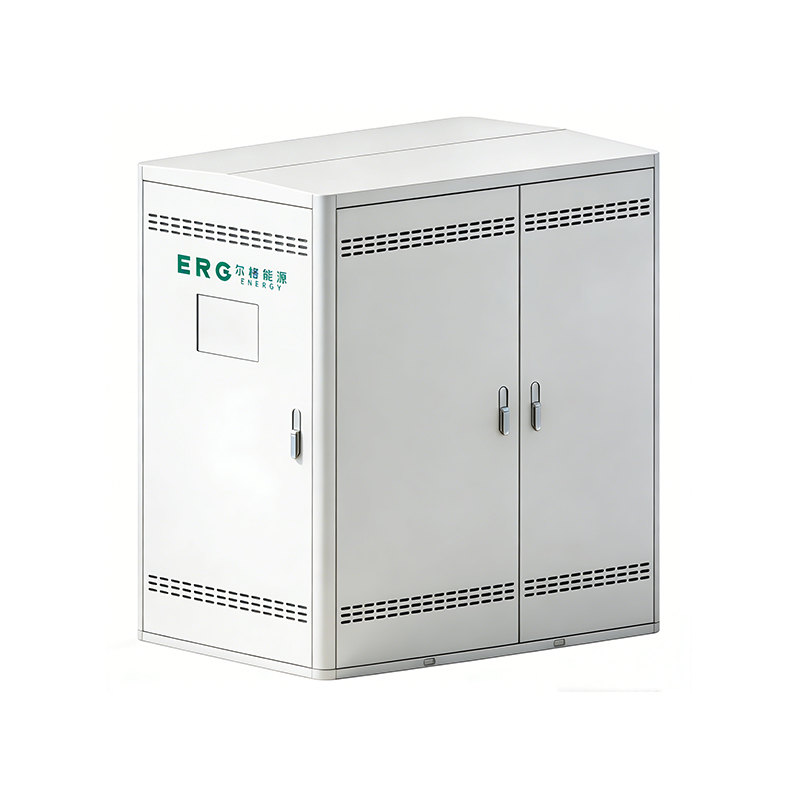
What Does Maintenance-Free Energy Storage System Mean in Practical Applications
In field applications, the term does not describe a system without physical aging or operational drift. Those still exist. What changes is the way these factors are managed.
Rather than periodic manual servicing, the system relies on internal routines that continuously adjust operating behavior. The expectation is that most routine interventions are no longer required at user level.
In practical interpretation, it often includes:
- Reduced dependence on scheduled manual inspection cycles
- Internal balancing of energy distribution across cells or modules
- Automated handling of deviations in operating conditions
- Fewer direct interventions on hardware components
The important distinction is that operational responsibility shifts inward. The Maintenance-Free Energy Storage System concept is therefore better understood as a control strategy layered on top of conventional storage hardware rather than a separate category of hardware.
Which Technologies Enable a Maintenance-Free Energy Storage System Design Today
The reduction in maintenance requirements is not achieved through a single mechanism. It emerges from the interaction of several system layers, each addressing a different type of operational variability.
Some of the key contributors include energy storage chemistry, control logic, structural configuration, and thermal behavior management. Each one addresses a different failure or drift pathway.
| Technology Area | Functional Role | Operational Effect |
|---|---|---|
| Energy storage chemistry | Governs charge and discharge stability | Reduces frequency of corrective calibration |
| Control logic system | Interprets system signals and responds | Handles routine decision making internally |
| Structural layout | Organizes physical arrangement of modules | Reduces mechanical stress points |
| Thermal behavior control | Manages heat distribution during operation | Prevents temperature-driven instability |
These layers do not operate independently. They form a coupled system where adjustments in one area influence behavior in others. In this structure, reduced maintenance demand is a secondary effect of coordinated design rather than an isolated feature.
How Battery Management System Is Essential in a Maintenance-Free Energy Storage System
The internal control layer responsible for monitoring and regulation plays a central role in maintaining stability without external intervention.
Its operation is continuous rather than periodic. Instead of waiting for manual inspection, it constantly evaluates electrical and thermal conditions inside the system.
Typical functions include:
- Tracking charge distribution across internal units
- Adjusting energy flow to maintain internal balance
- Identifying abnormal patterns in real time
- Triggering protective responses when thresholds are approached
What matters here is not only detection but timing. Response mechanisms are designed to act within the same operational cycle in which deviation is detected. This reduces the need for external correction steps.
Within a Maintenance-Free Energy Storage System, this layer effectively replaces a portion of traditional field maintenance activity with embedded decision processes.
How Maintenance-Free Energy Storage System Simplifies Daily Operation and Management
Operational simplification does not necessarily mean reduced internal complexity. In many cases, the internal logic becomes more active while user interaction becomes less frequent.
The visible change is in how operations are handled externally. Instead of manual adjustment, system behavior follows predefined logic paths.
In practical terms:
- Energy dispatch adjusts automatically according to load conditions
- Internal diagnostics run continuously without user initiation
- Status changes are presented as system signals rather than manual reports
- User involvement is mostly observational rather than procedural
There is still a structure of control and oversight, but it is concentrated within the system itself rather than distributed across operational personnel. This is where the Maintenance-Free Energy Storage System concept becomes functionally meaningful rather than purely descriptive.
How Environmental Conditions Affect Maintenance-Free Energy Storage System Reliability
Even when a storage system is designed to run with limited manual attention, the surrounding environment still plays a quiet but continuous role in how it behaves. Temperature swings, moisture in the air, and airflow inside the installation space do not usually cause immediate problems, but they slowly shape how internal components age and respond.
In practice, the system may adjust itself in the background to stay within safe operating ranges, but that adjustment has limits. When conditions stay stable, internal control works with fewer corrections. When conditions vary often, the system spends more time compensating internally, even if no one notices it directly.
A few typical influences can be observed:
- Heat buildup in confined installation spaces
- Moisture affecting insulation and enclosure surfaces
- Irregular airflow changing cooling consistency
- Repeated daily temperature shifts affecting cycle behavior
A Maintenance-Free Energy Storage System does not remove these influences. It mainly reduces the need for external response by handling part of the adjustment internally.
What Design Strategies Help a Maintenance-Free Energy Storage System Last Longer With Less Intervention
Design decisions in energy storage are often less about single features and more about how the whole structure handles stress over time. When parts are arranged in a way that isolates heat, limits exposure, and separates functional units, the system tends to behave more predictably.
Some structural approaches focus on containment, others on separation, and some on how heat moves through the enclosure. None of these completely remove wear, but they help slow uneven aging patterns and reduce the need for external correction.
| Design Strategy | What it focuses on | How it affects operation |
|---|---|---|
| Enclosed structure design | Reducing exposure to outside air and dust | Helps limit environmental wear over time |
| Modular internal layout | Splitting system into smaller independent units | Keeps issues from spreading widely |
| Heat flow guidance paths | Directing thermal movement inside the enclosure | Reduces localized temperature stress |
| Functional separation layers | Isolating control and power sections | Improves stability during abnormal conditions |
These ideas work together rather than independently. A Maintenance-Free Energy Storage System depends on this kind of layered structure to reduce how often physical attention is required during its working life.
What Users Should Monitor in a Maintenance-Free Energy Storage System Despite Low Maintenance Needs
Lower maintenance requirements do not mean the system can be ignored completely. Instead, the type of attention changes from physical handling to observing system behavior through indicators.
Most users will interact with the system indirectly, usually through status displays or alerts. What matters is noticing changes over time rather than reacting to single events.
Things that are worth paying attention to include:
- Whether output behavior starts to feel less consistent under similar usage
- Whether warning signals appear more frequently than before
- Whether charging and discharging patterns change without clear reason
- Whether the system takes longer to stabilize after load changes
These signals are not always signs of failure. In many cases, they reflect internal balancing or environmental adaptation. A Maintenance-Free Energy Storage System still relies on interpretation of these patterns to remain stable over long periods.
Where Maintenance-Free Energy Storage System Is Commonly Used in Real Projects
Systems designed for reduced maintenance are often selected in places where physical access is limited or operational continuity is more important than frequent servicing. The key factor is not the size of the installation, but how difficult it is to perform routine checks.
In many real situations, the following conditions are common:
- Sites located far from regular service routes
- Installations that support continuous background power supply
- Systems embedded in infrastructure where downtime is inconvenient
- Locations where maintenance scheduling is difficult to coordinate
In these environments, a Maintenance-Free Energy Storage System is not chosen because maintenance disappears entirely, but because reducing intervention frequency makes the overall operation more practical and predictable.
PREV:What Is Vanadium Redox Flow Battery Electrolyte and How It Works
NEXT:What Is a Flow Battery Factory and How Does It Work at Scale
NEXT:What Is a Flow Battery Factory and How Does It Work at Scale
Interested in cooperation or have questions?

Product
Content
+86-576-83200088
No. 2, Yongxing Road, Hairun Street, Sanmen County, Zhejiang Province
Copyright © Zhejiang ERG Energy LLC. All Rights Reserved.

Customized Flow Battery ODM Services for Global Energy Storage Market