 English
 中文简体
中文简体
What Is a Flow Battery Factory and How Does It Work at Scale
What Is a Flow Battery Factory and How Does It Work at Scale
What Is a Flow Battery Factory and How Does It Work at Scale
What Is a Flow Battery Factory and How Does It Work at Scale
What Is a Flow Battery Factory and How Does It Work at Scale
What Is a Flow Battery Factory and How Does It Work at Scale
What Is a Flow Battery Factory and How Does It Work at Scale
What Is a Flow Battery Factory and How Does It Work at Scale
What Is a Flow Battery Factory and How Does It Work at Scale
What Is a Flow Battery Factory and How Does It Work at Scale
What Is a Flow Battery Factory and How Does It Work at Scale
What Is a Flow Battery Factory and How Does It Work at Scale
What Is a Flow Battery Factory and How Does It Work at Scale
What Is a Flow Battery Factory and How Does It Work at Scale
What Is a Flow Battery Factory and How Does It Work at Scale
What Is a Flow Battery Factory and How Does It Work at Scale

Product Category
NEW Category
What Is a Flow Battery Factory and How Does It Work at Scale
Energy storage manufacturing is shifting toward systems that rely on liquid circulation rather than fixed charge structures. In this context, production environments are not just assembly spaces but also chemical and mechanical coordination points.
A Flow Battery Factory is often described as the place where this coordination happens. Materials are not simply assembled into parts, they pass through multiple preparation stages before becoming part of a working storage system. The boundary between chemistry and engineering becomes less distinct, especially when systems are expected to operate over long periods with repeated energy exchange cycles.
What stands out in this type of manufacturing setup is not only the hardware, but also how tightly each step depends on the previous one. Small variations in early stages can influence behavior much later in system operation.
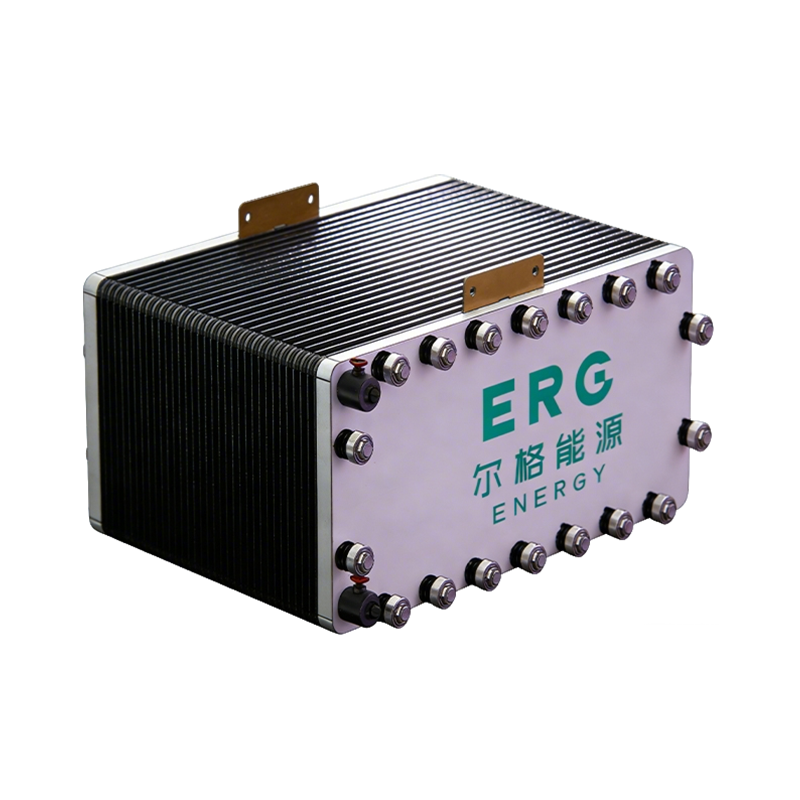
What is a Flow Battery Factory and how it transforms materials into grid scale energy storage systems
At a basic level, a Flow Battery Factory is where raw chemical materials and engineered components are gradually turned into complete storage systems capable of connecting to electrical networks.
The transformation is not linear. It moves through overlapping stages where material preparation, component fabrication, and system assembly interact with each other rather than operating as isolated steps.
In practice, the process usually follows a sequence similar to this:
- Liquid energy media is prepared and stabilized
- Electrochemical layers are formed and treated
- Reaction units are assembled into structured stacks
- Flow pathways and external modules are connected
| Stage | Function in production | Influence on final system |
|---|---|---|
| Material preparation | Defines chemical consistency | Affects energy carrying behavior |
| Component fabrication | Creates reaction interfaces | Shapes conversion stability |
| Stack assembly | Builds modular units | Determines structural balance |
| System connection | Links circulation paths | Enables operational continuity |
Inside the production environment, these steps are not treated as separate departments in practice. They often overlap in timing and require feedback between material properties and mechanical design decisions.
How does electrolyte production inside a Flow Battery Factory influence long duration energy storage performance
Electrolyte production tends to receive more attention than it appears at first glance. Although it is a liquid phase, its behavior influences nearly every aspect of system operation.
Instead of being a passive carrier, the electrolyte acts as the medium through which energy is stored and transferred. Any inconsistency in its composition can gradually affect system balance.
Several factors tend to matter most during production:
- Stability of chemical composition during mixing
- Purity control across preparation batches
- Behavior under repeated circulation cycles
- Interaction with separation layers inside the stack
In the production environment, electrolyte preparation is usually handled in controlled environments rather than open mixing processes. This is not only for chemical consistency but also to reduce long term drift in system behavior.
Over time, even small imbalances can lead to uneven charge distribution. That is why electrolyte handling is often linked directly with system maintenance planning, not just manufacturing output.
Which manufacturing steps define stack assembly in a Flow Battery Factory production line
Stack assembly is where individual reaction units begin to take a functional form. Each unit is layered, compressed, and connected in a way that allows liquid to flow through controlled paths.
The process is less about simple stacking and more about alignment under mechanical and fluid constraints. Components must remain stable under pressure while still allowing consistent circulation.
Typical steps include:
- Preparing electrode surfaces for reaction activity
- Positioning separation layers with precise alignment
- Applying controlled compression to maintain contact stability
- Sealing interfaces to prevent leakage
- Testing flow consistency across assembled units
Unlike rigid cell structures, these stacks depend on maintaining open pathways for liquids. This introduces additional sensitivity to sealing quality and material flexibility.
A Flow Battery Factory often treats stack assembly as a calibration stage as much as a manufacturing step. The reason is that performance is strongly linked to how evenly reactions occur across the entire structure.
How does automation change consistency and output in a Flow Battery Factory environment
Automation in this environment is not only about replacing manual tasks. It is more about maintaining repeatable conditions across processes that are sensitive to small variations.
For example, material dosing, layer placement, and sealing pressure all require a level of consistency that is difficult to maintain manually over long production cycles.
Common areas where automation is applied include:
- Controlled mixing of liquid components
- Mechanical alignment during assembly
- Pressure regulation in sealing operations
- Basic inspection of structural alignment
- Flow verification after assembly
Rather than removing human involvement completely, automation often works alongside monitoring systems. Operators still intervene when variations appear, especially during scaling phases where process behavior may shift.
One practical effect is improved stability between production batches. Another is smoother transition when increasing output capacity, since process parameters can be replicated more reliably.
Within the production environment, automation is therefore less about speed and more about maintaining predictable behavior across repeated cycles.
Which cost factors shape Flow Battery Factory production at scale
Cost structure in liquid based energy storage manufacturing is rarely driven by a single component. It tends to emerge from how materials, processing steps, and system assembly interact across the production chain.
In a Flow Battery Factory environment, cost sensitivity is often linked to material handling and system integration rather than isolated parts. The way liquids are prepared, stored, and circulated introduces additional layers of operational requirement compared with more compact energy systems.
Several areas typically influence overall structure:
- Raw material handling and purification effort
- Precision requirements during stack assembly
- Equipment needed for fluid circulation testing
- Quality control steps between production stages
- Storage and transport conditions for liquid media
Each of these adds incremental complexity rather than obvious cost spikes. Over time, these smaller layers form the overall production profile.
| Cost area | Production impact | Operational consideration |
|---|---|---|
| Material preparation | Affects consistency of inputs | Requires stable sourcing flow |
| Assembly precision | Influences rework rate | Needs controlled alignment |
| System testing | Extends production cycle | Ensures circulation stability |
| Logistics handling | Impacts storage design | Liquid safety management |
Instead of focusing on a single dominant factor, production planning usually balances these elements together.
Why is energy storage manufacturing development important for renewable energy integration and grid support
Energy systems based on renewable sources often experience variation in output. This creates conditions where storage systems are expected to respond in a flexible and sustained manner.
A Flow Battery Factory contributes indirectly to this requirement by enabling storage systems designed for longer operational cycles and repeated energy exchange without structural degradation of core components.
The relevance appears in several practical areas:
- Smoothing fluctuations between generation and demand
- Supporting extended discharge periods
- Allowing repeated cycling without frequent material replacement
- Providing modular deployment options across different sites
Rather than acting as a single solution, these systems function as part of a broader energy balancing approach.
The design of liquid based storage also allows separation between energy capacity and power delivery structure, which can be adjusted depending on system configuration. This flexibility is often used in grid level planning where requirements change depending on location and usage pattern.
How do Flow Battery Factory designs address electrolyte balance and system stability over time
System stability in liquid based storage depends heavily on maintaining balance between circulating chemical components. Unlike static storage systems, energy here is continuously exchanged through movement of liquids, which introduces gradual imbalance risks.
Design approaches in the production environment often focus on maintaining equilibrium through both structural and operational methods.
Key considerations include:
- Ensuring uniform distribution of liquid across all reaction paths
- Designing circulation loops that reduce stagnation zones
- Allowing rebalancing processes during operation cycles
- Monitoring changes in chemical concentration over time
These factors work together to reduce uneven utilization of active materials. Even small deviations in flow behavior can accumulate over extended periods, which makes system layout an important part of long term performance.
In practice, stability is not achieved by a single mechanism but through continuous interaction between design geometry and operational control.
What role does system integration play in energy storage manufacturing solutions
System integration represents the stage where individual components begin to function as a coordinated unit. In a Flow Battery Factory context, this involves connecting electrochemical stacks, fluid circulation systems, control modules, and safety structures into a single operational framework.
The challenge is not only physical connection but also ensuring that flow, pressure, and energy transfer remain aligned across the entire system.
Typical integration elements include:
- Connection of stack modules into circulation networks
- Coordination between pumping systems and reaction units
- Alignment of monitoring and control feedback loops
- Integration of thermal and flow regulation paths
| Subsystem | Role in integration | Interaction focus |
|---|---|---|
| Stack modules | Energy conversion | Reaction uniformity |
| Circulation system | Liquid movement | Flow consistency |
| Control system | Operational regulation | Feedback balance |
| Support structure | Physical housing | Stability and access |
Within the production process, integration is often treated as a verification stage where system behavior is observed under controlled conditions before deployment.
How does automation change consistency and output in a Flow Battery Factory environment
Automation in this setting is closely linked to repeatability rather than acceleration alone. Since production involves both chemical and mechanical processes, small deviations can influence later system behavior.
As a result, automation is commonly introduced in stages where consistency is more critical than flexibility.
These stages often include:
- Controlled dispensing of liquid components
- Mechanical alignment during stack formation
- Pressure control during sealing processes
- Inspection of structural uniformity
- Flow verification after assembly completion
The value of automation becomes more visible when production scales across multiple cycles. It reduces variation between batches and helps maintain stable operating conditions in downstream system performance.
At the same time, human oversight remains present, particularly in calibration and adjustment phases where process behavior may shift slightly.
Within this structure, Zhejiang ERG Energy LLC. appears in connection with broader discussions on industrial participation in liquid based energy storage manufacturing ecosystems.
PREV:Why Choose a Maintenance-Free Energy Storage System for Long Term Use
NEXT:How Does a Safe Energy Storage System Ensure Long Term Safety Stability
NEXT:How Does a Safe Energy Storage System Ensure Long Term Safety Stability
Interested in cooperation or have questions?

Product
Content
+86-576-83200088
No. 2, Yongxing Road, Hairun Street, Sanmen County, Zhejiang Province
Copyright © Zhejiang ERG Energy LLC. All Rights Reserved.

Customized Flow Battery ODM Services for Global Energy Storage Market