 English
 中文简体
中文简体
What Is Vanadium Redox Flow Battery Electrolyte and How It Works
What Is Vanadium Redox Flow Battery Electrolyte and How It Works
What Is Vanadium Redox Flow Battery Electrolyte and How It Works
What Is Vanadium Redox Flow Battery Electrolyte and How It Works
What Is Vanadium Redox Flow Battery Electrolyte and How It Works
What Is Vanadium Redox Flow Battery Electrolyte and How It Works
What Is Vanadium Redox Flow Battery Electrolyte and How It Works
What Is Vanadium Redox Flow Battery Electrolyte and How It Works
What Is Vanadium Redox Flow Battery Electrolyte and How It Works
What Is Vanadium Redox Flow Battery Electrolyte and How It Works
What Is Vanadium Redox Flow Battery Electrolyte and How It Works
What Is Vanadium Redox Flow Battery Electrolyte and How It Works
What Is Vanadium Redox Flow Battery Electrolyte and How It Works
What Is Vanadium Redox Flow Battery Electrolyte and How It Works
What Is Vanadium Redox Flow Battery Electrolyte and How It Works
What Is Vanadium Redox Flow Battery Electrolyte and How It Works

Product Category
NEW Category
What Is Vanadium Redox Flow Battery Electrolyte and How It Works
Energy storage systems built on liquid chemistry depend on more than a tank, a pump, or a membrane. They rely on how the liquid behaves when it moves, rests, heats up, cools down, and passes through repeated operating cycles. In that setting, Vanadium Redox Flow Battery Electrolyte is not just a working fluid. It is the part of the system that carries the electrochemical change from one place to another.
That role sounds simple at first, but the practical picture is more layered. The liquid has to stay stable, remain compatible with the surrounding hardware, and respond in a predictable way when the system changes from charge to discharge. If the balance shifts too far in one direction, the whole system can become harder to manage. That is why composition, circulation, and operating environment are usually discussed together rather than as separate issues.
For manufacturers and project developers, the real question is often not whether the electrolyte can function, but how it behaves over time. Small changes in formula or operating conditions can alter flow, reaction balance, and maintenance needs. In field use, those details matter more than broad descriptions.
What Vanadium Redox Flow Battery Electrolyte is made of and how each component affects stability
At a basic level, the electrolyte is a liquid solution built to hold vanadium species in a chemically active state. The liquid medium is there to carry ions. The acidic environment helps keep the active material dissolved. The vanadium content provides the redox behavior that makes the system work. Each part supports the others, and none of them works well in isolation.
That is also why formulation is treated as a balance rather than a fixed recipe. A small shift in acidity can change how the dissolved species behave. A change in concentration can affect fluid movement. Even a minor impurity can influence long-term consistency.
| Component type | Main role | Practical effect |
|---|---|---|
| Liquid medium | Moves ions through the system | Supports circulation |
| Acidic environment | Keeps active material in solution | Helps chemical stability |
| Vanadium species | Stores and releases energy | Enables reversible reaction |
| Minor additives | Adjusts liquid behavior | Helps manage operating range |
In Vanadium Redox Flow Battery Electrolyte, the most useful way to think about stability is not as a single property, but as a condition that depends on how these parts interact. A solution may look fine at rest and still behave differently once it is circulating under load. That is why lab results and real operating behavior do not always match in a straightforward way.
A few practical points often come up in technical discussions:
- The liquid must remain uniform during storage and use.
- The reaction species need to stay dissolved under normal conditions.
- Small formulation changes can affect how the system handles heat and flow.
- Purity control matters because even small contaminants can shift behavior.
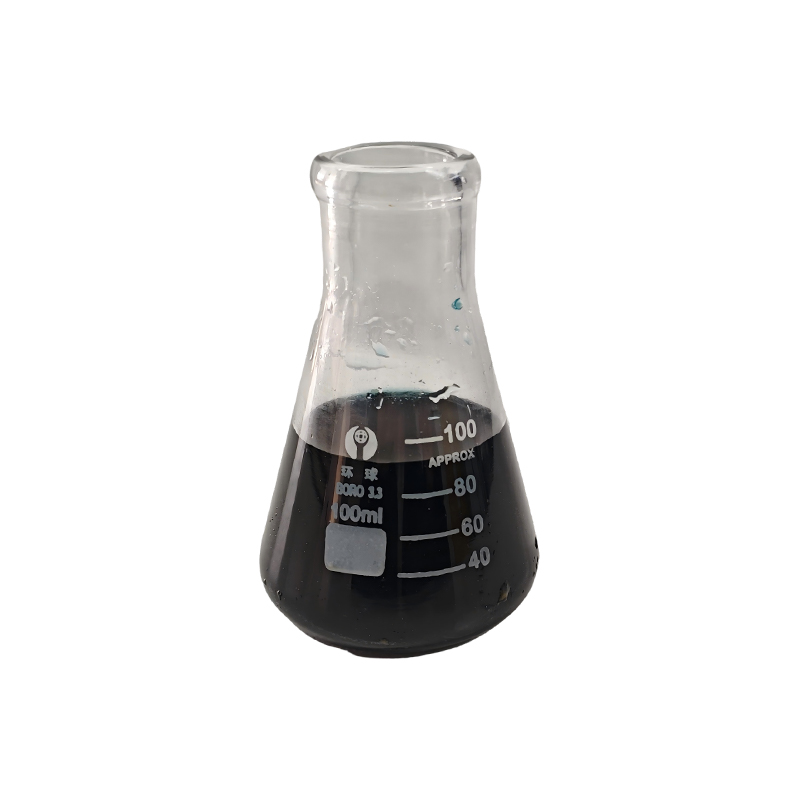
How Vanadium Redox Flow Battery Electrolyte works inside long duration energy storage systems
In a long duration system, the electrolyte moves between tanks and electrochemical cells. During that movement, it supports the transfer of energy through reversible chemical change. The liquid does not "store" energy in the same way a solid material might. Instead, it carries the active chemical state from one part of the system to another.
The sequence is fairly direct, even if the engineering behind it is not:
- The liquid is pumped into the reaction area.
- Chemical change takes place during charging or discharging.
- The liquid returns to storage.
- The cycle repeats as demand changes.
What makes this structure useful is the separation between energy capacity and power delivery. The system can be arranged so that the tanks, flow path, and cell stack work together without forcing every function into one fixed material block. That gives designers more room to adjust the setup to the project.
For Vanadium Redox Flow Battery Electrolyte, flow consistency is a central issue. If circulation becomes uneven, the reaction zone may not stay balanced. If the liquid spends too much time in one place, local conditions can drift. In practice, this means the hydraulic side and the chemical side need to be treated as one operating system rather than two separate ones.
How Vanadium Redox Flow Battery Electrolyte supports repeated charge and discharge cycles in real projects
Repeated cycling is where the design either holds together or starts to show weakness. The electrolyte is built to support reversible transitions, so the same liquid can keep participating in energy transfer across many operating cycles. That does not mean the behavior stays unchanged forever. It means the system is designed to return to a usable state again and again.
In field projects, cycle behavior depends on a few linked factors. The first is the condition of the liquid itself. The second is how evenly the system moves it through the cells. The third is how closely the operating conditions stay within a steady range.
If the system is controlled well, the electrolyte can continue to perform in a stable pattern. If not, the balance between the different reaction states may drift. That drift is often slow, which is part of the problem. It does not always appear as a sudden fault. More often, it shows up as a gradual change in operating behavior.
Why temperature changes influence behavior during operation
Temperature has a direct effect on liquid-based electrochemical systems. When conditions become cooler, fluid movement may slow and the solution may behave differently in terms of solubility. When conditions rise, reaction behavior may change again, sometimes in ways that make the system less forgiving.
The important point is not that temperature creates one fixed outcome. It is that it changes several properties at the same time. Flow resistance, chemical balance, and reaction response can all shift together.
| Temperature condition | Typical effect on operation | What the system may feel |
|---|---|---|
| Lower range | Slower movement and less easy circulation | More resistance in flow |
| Moderate range | More even reaction behavior | Steadier operation |
| Higher range | Faster chemical activity, but less margin for stability | Greater need for control |
In Vanadium Redox Flow Battery Electrolyte, thermal management is not a side issue. It affects how comfortably the system operates and how much variation it can tolerate. A stable temperature environment gives the liquid a better chance of holding its intended behavior, especially when the system is working continuously and small shifts can accumulate over time.
What causes imbalance in Vanadium Redox Flow Battery Electrolyte during long term use
Over time, a circulating electrolyte system does not remain in a perfectly even state. In real operation, Vanadium Redox Flow Battery Electrolyte can gradually shift away from its intended balance. This does not usually come from a single sharp failure. It is more often the result of small, repeated changes that build up during continuous cycling.
One common source is the movement of ions across separation layers inside the system. Even when this movement is limited, it can slowly alter the distribution of active species between different zones. Another factor is water movement, which can slightly change concentration levels in different parts of the loop.
There is also the effect of repeated redox cycling itself. Each cycle is reversible, but no system is perfectly symmetrical in practice. Over long periods, this can lead to small differences between the two sides of the system.
Typical contributors include:
- Gradual ion transfer across internal boundaries
- Small concentration shifts caused by water movement
- Uneven reaction activity between circulating loops
- Minor differences in flow timing or distribution
The challenge is that these effects do not always appear clearly during short observation periods. They tend to develop slowly, which is why operational monitoring often focuses on trends rather than single measurements.
Which factors influence the performance of Vanadium Redox Flow Battery Electrolyte in large scale energy systems
When the system scale increases, the behavior of the electrolyte becomes more sensitive to physical layout and operating coordination. In Vanadium Redox Flow Battery Electrolyte systems, performance is not defined only by chemical composition. It is also shaped by how the liquid moves through the hardware and how evenly it is exposed to reaction zones.
Flow behavior is one of the central factors. If circulation is uneven, parts of the electrolyte may experience different conditions even within the same cycle. This can affect how efficiently energy is transferred.
Another factor is internal resistance within the flow path. Longer or more complex paths can create differences in pressure and movement speed, which may influence reaction consistency.
System purity also plays a role. Even small levels of contamination can change how the liquid behaves under continuous circulation. This becomes more noticeable as system size increases, because the total volume amplifies small effects.
Performance-related influences often include:
- Flow uniformity across all channels
- Interaction between liquid movement and reaction zones
- Structural resistance within the circulation loop
- Sensitivity to small impurity levels in the solution
These factors interact rather than operate independently. A change in one area may shift behavior in another, especially under continuous load conditions.
How Vanadium Redox Flow Battery Electrolyte is produced from vanadium raw materials in manufacturing processes
The production of electrolyte begins with vanadium-containing raw materials that need to be transformed into a stable liquid form suitable for circulation. In the case of Vanadium Redox Flow Battery Electrolyte, the main goal of processing is not only conversion, but also control of chemical consistency.
The raw material is first processed to reach a form that can dissolve under controlled conditions. After that, it is introduced into an acidic environment where it can exist in a stable dissolved state. The process is gradual, and each step affects the final behavior of the liquid.
Purity control is an important part of this stage. Any unwanted elements introduced early in the process may remain in the final solution and influence long-term stability. For this reason, multiple refinement steps are often used to reduce unwanted residues.
| Stage | Purpose | Key effect on final electrolyte |
|---|---|---|
| Raw material preparation | Adjust material form for processing | Enables controlled dissolution |
| Chemical conversion | Introduce active liquid state | Forms usable electrolyte structure |
| Stabilization phase | Balance solution environment | Helps maintain consistency |
| Filtration and adjustment | Remove unwanted residues | Supports long-term reliability |
Even though the steps appear sequential, the outcome depends heavily on control conditions throughout the entire process. Small variations during preparation can influence how the electrolyte behaves during circulation later in the system.
When Vanadium Redox Flow Battery Electrolyte needs monitoring or rebalancing in operating systems
In operating systems, the condition of the electrolyte is not fixed. Vanadium Redox Flow Battery Electrolyte gradually changes as it moves through repeated cycles and interacts with system components. Because of this, monitoring becomes part of normal system operation rather than an occasional task.
One indication that attention may be needed is a shift in how evenly the system responds during charge and discharge. If one side of the system begins to behave differently from the other, it may suggest that balance has drifted.
Another sign is gradual change in circulation behavior. Even if the system continues to run, small differences in flow response can indicate that internal conditions are not fully aligned anymore.
Monitoring is often guided by observation of trends rather than isolated readings. This helps identify slow changes that might otherwise be missed.
Common situations that call for closer attention include:
- Noticeable differences in reaction behavior between cycles
- Changes in flow response during normal operation
- Gradual drift in system balance over extended use
- Irregular behavior under otherwise stable conditions
Rebalancing, when needed, is generally aimed at restoring internal uniformity rather than changing the fundamental structure of the system. It is part of maintaining long-term operational continuity rather than a corrective action after failure.
PREV:What Defines Long Cycle Life Battery Performance And Lifespan In Real Applications
NEXT:Why Choose a Maintenance-Free Energy Storage System for Long Term Use
NEXT:Why Choose a Maintenance-Free Energy Storage System for Long Term Use
Interested in cooperation or have questions?

Product
Content
+86-576-83200088
No. 2, Yongxing Road, Hairun Street, Sanmen County, Zhejiang Province
Copyright © Zhejiang ERG Energy LLC. All Rights Reserved.

Customized Flow Battery ODM Services for Global Energy Storage Market