 English
 中文简体
中文简体
What Should You Know About Vanadium Redox Flow Battery Systems
What Should You Know About Vanadium Redox Flow Battery Systems
What Should You Know About Vanadium Redox Flow Battery Systems
What Should You Know About Vanadium Redox Flow Battery Systems
What Should You Know About Vanadium Redox Flow Battery Systems
What Should You Know About Vanadium Redox Flow Battery Systems
What Should You Know About Vanadium Redox Flow Battery Systems
What Should You Know About Vanadium Redox Flow Battery Systems
What Should You Know About Vanadium Redox Flow Battery Systems
What Should You Know About Vanadium Redox Flow Battery Systems
What Should You Know About Vanadium Redox Flow Battery Systems
What Should You Know About Vanadium Redox Flow Battery Systems
What Should You Know About Vanadium Redox Flow Battery Systems
What Should You Know About Vanadium Redox Flow Battery Systems
What Should You Know About Vanadium Redox Flow Battery Systems
What Should You Know About Vanadium Redox Flow Battery Systems

Product Category
NEW Category
What Should You Know About Vanadium Redox Flow Battery Systems
Renewable energy keeps expanding, and along with that growth, energy storage has quietly become one of the more pressing pieces of managing electricity supply and demand. Solar panels and wind turbines generate clean power, no question there, but output swings depending on weather, time of day, season — factors nobody really controls. Storage technology steps in here, helping build a system flexible enough to hold power until it's actually needed, rather than only when nature decides to provide it.
Among the storage options floating around the industry, Vanadium Redox Flow Battery systems have picked up a fair amount of attention, mostly because of how differently they approach the whole storage problem. Traditional batteries lock active materials inside fixed cells. Flow batteries don't work that way at all — they push liquid electrolytes through external tanks instead. That single design choice means energy capacity and power output can get planned as two separate variables, which honestly opens up a lot more room for maneuvering during system design.
Companies, project developers, energy solution providers — anyone in this space picking a storage system needs more than surface-level knowledge of how batteries function generally. System structure, operating conditions, maintenance demands, the environment the system's actually going into — all of it shapes whether a particular setup makes sense.
Getting a real feel for how flow battery technology operates, where it tends to get used, and what pushes its performance one way or another can make evaluating storage options a lot less of a guessing game.
How Does Vanadium Redox Flow Battery Work From Inside to Outside
At its core, a flow battery runs on the movement and conversion of electrolyte material. Liquid electrolyte cycles between storage tanks and the battery stack, and inside that stack, electrochemical reactions handle the actual job of storing or releasing energy.
Breaking the process down a bit:
- Electrolyte storage — Liquid electrolyte sits in separate tanks before it ever reaches the reaction zone. That stored liquid is what carries the active materials involved in the whole energy conversion.
- Electrolyte circulation — Pumps push the liquid through the system, and how well that flow gets controlled has a real effect on efficiency.
- Battery stack reaction — Inside the stack, chemical reactions store energy during charging and let it go again during discharge.
- Energy conversion process — Chemical energy gets turned back into electrical energy the moment power's actually called for.
What really sets this apart is that split between storage and conversion. Bigger electrolyte tanks mean more stored energy; stack design shapes how much power can actually get delivered at once. Two separate knobs, essentially, instead of one fixed package.
| Component | Main Function |
|---|---|
| Electrolyte tanks | Store liquid energy materials |
| Pumps | Control electrolyte movement |
| Battery stack | Performs electrochemical reactions |
| Control system | Manages system operation |
This kind of layout gives manufacturers room to design differently depending on the job. A setup built to back up renewable energy probably won't look the same as one built for heavier industrial energy management.
What Is Vanadium Redox Flow Battery and Why Does It Matter
A Vanadium Redox Flow Battery is a rechargeable storage system built around vanadium-based electrolyte solutions. It stores electrical energy by shifting vanadium ions between different chemical states as the battery charges and discharges.
Part of why people pay attention to this technology comes down to the electrolyte's reusable nature. Instead of tossing out the whole storage material after heavy cycling, the electrolyte can just stay in the system, cycling through the same conversion process again and again.
A few things worth keeping in mind when weighing this design:
- Flexible sizing depending on what the project actually needs
- Reasonable tolerance for repeated charge-discharge cycles
- A genuine split between stored energy and power output
- Management built around liquid handling rather than solid cells
Every storage technology out there gets built with different priorities in mind. Some chase compact size above everything else, others aim for longer stretches of operation or specific environments they're meant to survive in. Flow battery systems tend to get pulled into the conversation when a project needs steady energy management stretched out over a longer timeline.
For anyone working industrially, getting a grip on the basic structure and how it actually operates is a pretty reasonable first step before deciding whether this fits the bill.
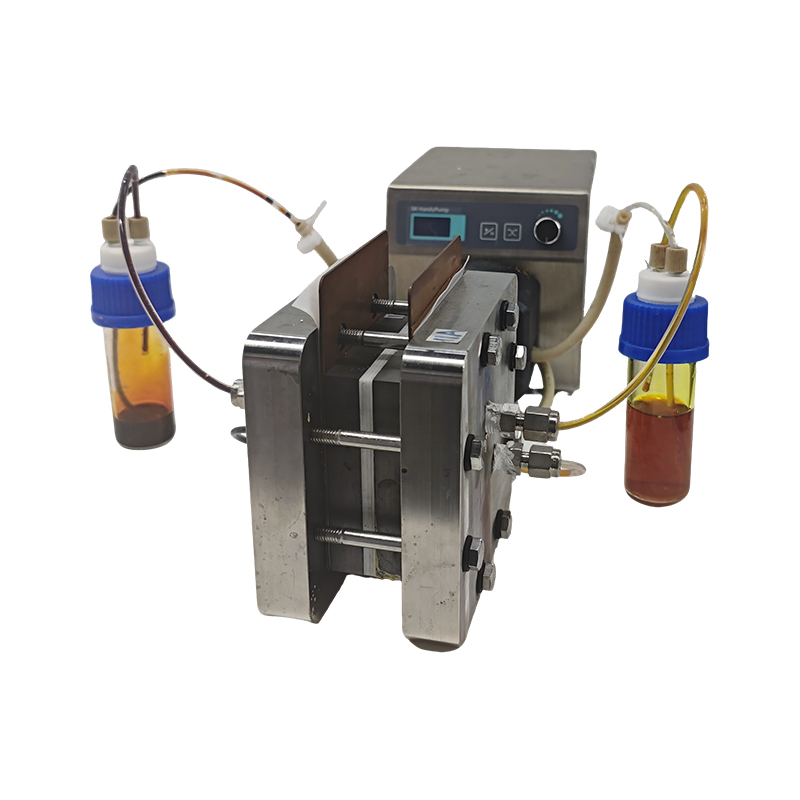
What Should You Know About Vanadium Flow Battery Components
A working storage system leans on several components, all pulling together. Each piece shapes how operation goes, what maintenance looks like, and how the whole thing gets designed in the first place.
Electrolyte System — This carries energy through the chemical reactions that make the whole thing work. Its condition matters a lot, so keeping it monitored properly over time isn't optional if you want consistent operation.
Battery Stack — The actual site where electrochemical reactions happen. Internal structure here shapes conversion performance and how efficient the whole system ends up being.
Circulation System — Pumps and pipelines that move electrolyte between the tanks and the stack. Get this layout wrong, and stable operation gets a lot harder to pull off.
Control Equipment — Monitoring and control units that let operators keep tabs on system status, operating conditions, and safety functions as things run.
| System Part | Role in Operation |
|---|---|
| Electrolyte | Transfers energy through chemical reactions |
| Stack | Converts chemical energy and electrical energy |
| Pumps | Maintains liquid circulation |
| Control equipment | Monitors and adjusts system operation |
Manufacturers really can't design around just one piece here. It's the interplay between all these components that determines whether a system actually holds up across different applications.
What Factors Affect Vanadium Flow Battery Performance During Long Term Operation
Nothing about long-term performance rides on a single factor. Environment, design choices, maintenance habits — they all stack up together and shape how well a system holds up over time.
Temperature Conditions — Shifts in temperature can throw off electrolyte behavior and general operation. Decent thermal management goes a long way toward keeping things steady.
Electrolyte Management — How the electrolyte holds up over time affects energy conversion directly. Regular checks help catch anything drifting before it becomes a bigger issue.
System Design — Pipeline layout, pump choice, control logic — small design decisions here ripple into how smoothly everything actually runs day to day.
Maintenance Planning — Routine inspection, sensible upkeep — this is what keeps unexpected problems from piling up unnoticed.
For anyone evaluating storage options, it's worth looking past the install date. A system genuinely needs to fit the environment it's going into and match whatever management resources are actually available on-site.
Why Is Vanadium Redox Flow Battery Used for Energy Storage Systems
Storage systems get pulled into a lot of situations where electricity supply needs more give in it. Flow battery technology tends to show up specifically where controlled storage and repeated cycling are part of the deal.
Common places this shows up:
- Renewable energy support
- Industrial power management
- Grid-related energy storage
- Energy balancing systems
A big draw for companies looking this direction is that split between storage capacity and power conversion hardware. Engineers get to plan around actual project conditions instead of working within a rigid, fixed package.
Set against more compact battery options, flow systems generally take up more physical room, simply because they depend on those external electrolyte tanks. That makes site conditions and overall project goals genuinely important when weighing whether this fits.
At the end of the day, the right pick comes down to what the project actually needs, what the site looks like, and how the operation plans to manage things long-term.
How Can Vanadium Redox Flow Battery Support Renewable Energy
Solar and wind generation swing around a lot — that's just the nature of relying on weather. Storage helps smooth that out, holding onto surplus energy so it's there when generation dips instead of letting it go to waste.
A flow battery system can help renewable projects in a few practical ways:
- Storing electricity when generation outpaces demand
- Supplying power when renewable output drops
- Adding real flexibility to overall energy management
- Supporting steadier, more predictable power supply planning
Solar setups benefit here by bridging the gap between what gets generated during the day and what's actually needed later on. Wind projects lean on this to smooth out the unpredictability that comes with shifting weather patterns.
None of this is purely about warehousing electricity for later, either. It's really about making the whole energy system more responsive as conditions keep shifting underneath it.
Vanadium Redox Flow Battery vs Lithium Battery What Are the Differences in Energy Storage Applications
Different battery technologies come from genuinely different design philosophies, and each tends to lean toward its own set of applications. Lining them up side by side helps clarify which one might actually suit a given project.
| Comparison Area | Flow Battery System | Lithium Battery System |
|---|---|---|
| Energy storage method | Uses liquid electrolyte circulation | Stores energy inside battery cells |
| System design | Uses external storage tanks | Uses integrated battery modules |
| Application focus | Often considered for longer operation needs | Commonly used in various compact applications |
| Maintenance approach | Requires electrolyte and circulation management | Requires cell and battery management |
Which one actually makes sense really comes down to the specifics of the project — available space, operating demands, energy management goals, how maintenance is planned out.
Neither technology's really trying to replace the other here. They tend to end up serving different corners of the energy storage landscape, each suited to its own set of circumstances.
How to Choose the Right Vanadium Redox Flow Battery System
Picking a storage system really means sitting down and working through practical needs rather than going off general impressions. Companies generally work through a handful of areas before landing on a decision.
Application Requirements — Every project carries its own storage goals. What works for backing up renewables won't necessarily line up with what an industrial application actually needs.
System Configuration — Storage capacity, power output, component selection — all of it should trace back to how the system's actually going to get used.
Operating Environment — Where the system sits, what temperatures it'll face, how much space is actually available — these shape planning more than people sometimes expect.
Supplier Capability — Manufacturing track record, technical support, willingness to customize — all worth weighing seriously before committing to a supplier.
A genuinely suitable storage solution isn't just about the battery hardware in isolation. It comes down to how well the whole system, top to bottom, actually fits what the customer needs operationally.
Weighing the underlying technology, the components involved, the site conditions, and future management needs together tends to give companies a much clearer path when sorting through Vanadium Redox Flow Battery options against whatever else is on the table.
PREV:How to Select a Flow Battery Vendor for Future Energy Needs
NEXT:How Does a Flow Battery Manufacturer Build Energy Storage Solutions
NEXT:How Does a Flow Battery Manufacturer Build Energy Storage Solutions
Interested in cooperation or have questions?

Product
Content
+86-576-83200088
No. 2, Yongxing Road, Hairun Street, Sanmen County, Zhejiang Province
Copyright © Zhejiang ERG Energy LLC. All Rights Reserved.

Customized Flow Battery ODM Services for Global Energy Storage Market