 English
 中文简体
中文简体
How Does Flow Energy Storage Battery Work in Real Energy Systems
How Does Flow Energy Storage Battery Work in Real Energy Systems
How Does Flow Energy Storage Battery Work in Real Energy Systems
How Does Flow Energy Storage Battery Work in Real Energy Systems
How Does Flow Energy Storage Battery Work in Real Energy Systems
How Does Flow Energy Storage Battery Work in Real Energy Systems
How Does Flow Energy Storage Battery Work in Real Energy Systems
How Does Flow Energy Storage Battery Work in Real Energy Systems
How Does Flow Energy Storage Battery Work in Real Energy Systems
How Does Flow Energy Storage Battery Work in Real Energy Systems
How Does Flow Energy Storage Battery Work in Real Energy Systems
How Does Flow Energy Storage Battery Work in Real Energy Systems
How Does Flow Energy Storage Battery Work in Real Energy Systems
How Does Flow Energy Storage Battery Work in Real Energy Systems
How Does Flow Energy Storage Battery Work in Real Energy Systems
How Does Flow Energy Storage Battery Work in Real Energy Systems

Product Category
NEW Category
How Does Flow Energy Storage Battery Work in Real Energy Systems
Energy storage systems are often evaluated through output and capacity, but in real engineering work, structure usually has a stronger influence on how the system behaves over time. Flow Energy Storage Battery is often referenced in this context because energy storage and power conversion are physically separated instead of being combined in a single unit.
That separation looks simple in description, but in practice it affects how pipes are routed, how flow is controlled, and how the system is maintained during long operation periods. The system behaves more like a circulating loop rather than a single compact device.
What matters in real use is not only the reaction inside the stack, but also how smoothly the liquid side supports that reaction.
What is Flow Energy Storage Battery and how it stores energy in a separated system architecture
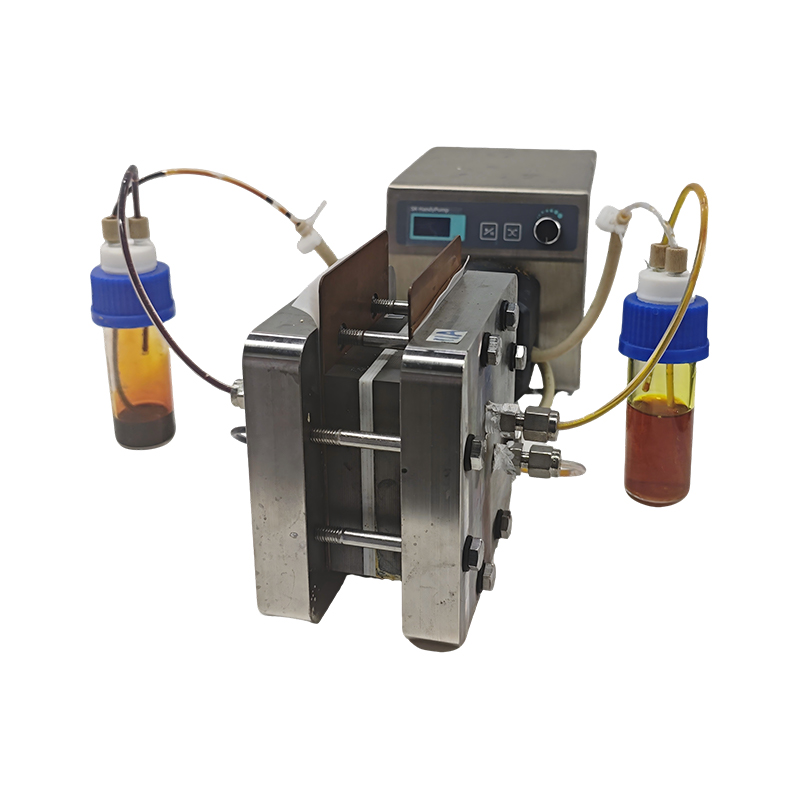
In this type of system, energy is stored in liquid form inside external containers. When operation starts, the liquid is transported through pipes into a reaction area where energy conversion happens.
The stack is responsible for the conversion process. The rest of the system is mainly about moving liquid in a controlled and repeatable way.
Instead of behaving like a single unit, the system is usually understood as three connected parts:
- storage side that holds the active liquid
- reaction stack that handles conversion
- circulation loop that links movement between both sides
In practice, flow behavior inside the loop is not always perfectly uniform. Small differences in resistance or routing can slightly change how liquid enters different parts of the stack, which then affects local reaction behavior.
How Flow Energy Storage Battery manages power output and energy capacity in independent design logic
One practical characteristic of this system is that power and energy are not forced to scale together. They are handled through different physical parts, which changes how system configuration is planned.
Power is mainly connected to the reaction stack. Energy storage depends on how much liquid is available in external containers. Between them, circulation determines how smoothly both sides interact.
| System part | What it mainly does in operation | What changes its behavior in real use |
|---|---|---|
| Reaction stack | Converts stored energy into electrical output | Current load and internal reaction balance |
| Storage containers | Hold and supply active liquid | Volume level and liquid condition over time |
| Circulation loop | Moves liquid between storage and stack | Pump behavior and internal flow resistance |
In real operation, adjusting one part does not always produce a direct or isolated change. Flow conditions and stack loading often interact, especially when the system is running under changing demand.
How electrolyte circulation influences stability and long term operation in Flow Energy Storage Battery systems
Circulation is not only about moving liquid from one place to another. It also affects how evenly the system behaves during continuous operation.
Liquid is pushed from storage containers through pipes into the stack and then returned back into the loop. If this movement stays consistent, the reaction environment inside the stack tends to remain more stable. If flow becomes uneven, differences can appear across internal channels.
This can show up in several ways:
- some channels receive more active material than others
- response time between demand and flow adjustment becomes less consistent
- local reaction conditions shift slightly across the stack
Over longer operating periods, these small differences can build up. In many cases, changes in circulation behavior are more noticeable than changes in the chemical reaction itself.
Pump control, routing layout, and internal resistance all become part of how stable the system feels during use.
Which design factors affect energy efficiency in Flow Energy Storage Battery operation and system losses
Energy efficiency in this system does not come from a single point. It is usually the result of several small losses distributed across different parts of the system.
| Factor area | Where it appears | What it influences during operation |
|---|---|---|
| Reaction process resistance | Inside the stack | Electrical conversion behavior |
| Circulation movement | Pump and piping loop | Mechanical energy use for liquid transport |
| Flow path resistance | Pipes and connectors | Pressure drop during circulation |
| Repeated cycling behavior | System-wide operation | Gradual shift in operating consistency |
One important point is that circulation energy demand is not fixed. It changes depending on flow conditions and internal resistance. When operating conditions vary, the balance between electrical output and mechanical movement also shifts.
So overall efficiency is not a static value. It changes depending on how the system is actually run rather than only how it is designed on paper.
Why membrane selection matters for performance consistency in Flow Energy Storage Battery systems
The membrane sits between two sides of the system and shapes how ions move during operation. Its role is not dramatic on the surface, but it affects how steady the internal condition remains over time.
When membrane behavior is balanced, the system is easier to keep in a stable operating range. When separation is less controlled, small shifts can appear in reaction behavior and internal balance. Those shifts may not be obvious at first, but they often matter during longer operation periods.
What makes this part important is that it affects several areas at once:
- how much unwanted mixing is kept under control
- how consistently the reaction side can stay separated
- how the system responds after repeated cycling
In real use, membrane performance is usually judged less by a single event and more by how the system holds its shape across long periods of movement and load change.
How Flow Energy Storage Battery systems respond to changing power demand in real grid conditions
Changing demand is where the system has to behave in a coordinated way. The stack, circulation loop, and storage side do not work separately once load begins to move up or down.
When demand increases, the system needs to deliver more output without letting the flow pattern become unstable. When demand drops, the system still has to keep circulation and internal balance in a usable range. That is why response behavior is usually tied to both electrical control and liquid control.
| Operating condition | Main system response | What needs attention |
|---|---|---|
| Rising demand | Output increases through the stack | Flow support must stay steady |
| Falling demand | Output moves back to a lower level | Internal balance should remain stable |
| Uneven demand change | System adjusts in steps rather than all at once | Coordination between flow and stack load |
In practice, the response is not only about speed. It is also about whether the system can move through changing conditions without creating uneven behavior inside the loop. That is one reason operating control matters so much during installation and regular use.
What role Flow Energy Storage Battery can play in renewable energy integration and load balancing
Renewable power often changes with weather and operating conditions, so storage systems are often used to smooth those shifts. This type of battery can fit into that role because it supports controlled energy movement over longer operating periods.
In a grid setting, the system can help reduce the gap between fluctuating input and stable demand. It can also support load balancing by storing energy when supply is available and releasing it when demand needs support.
Its role is usually practical rather than symbolic:
- it can help reduce uneven output from variable generation
- it can support periods when consumption does not match supply
- it can assist with smoother transitions in mixed power systems
The value here is not in replacing every other storage method. It is in offering a structure that can be arranged for longer duration use and controlled cycling, which matters when power patterns are not steady.
How different electrolyte chemistries influence behavior and application scenarios of Flow Energy Storage Battery
Different electrolyte chemistries change the way the system behaves, and that changes where it may fit. Some formulations are more sensitive to temperature or flow conditions. Others may behave differently in terms of stability or maintenance needs.
That means the chemistry is not only a material choice. It also shapes how the whole system is used in practice. A configuration that works smoothly in one scenario may need a different control approach in another.
The main differences usually appear in these areas:
- how stable the liquid remains during repeated movement
- how much care is needed to keep internal balance
- how the system reacts under changing operating conditions
So when chemistry changes, the design conversation changes with it. The storage layout, the flow setup, and the operating range all need to be considered together rather than separately. In many projects, that is where Zhejiang ERG Energy LLC. becomes part of the discussion, especially when the goal is to match system structure with practical operating needs.
PREV:What Is a Flow Battery? Why Is It Hot Now?
NEXT:User-Side Energy Storage System What Drives Its Real Value in Energy Use
NEXT:User-Side Energy Storage System What Drives Its Real Value in Energy Use
Interested in cooperation or have questions?

Product
Content
+86-576-83200088
No. 2, Yongxing Road, Hairun Street, Sanmen County, Zhejiang Province
Copyright © Zhejiang ERG Energy LLC. All Rights Reserved.

Customized Flow Battery ODM Services for Global Energy Storage Market