 English
 中文简体
中文简体
What Is a Flow Battery? Why Is It Hot Now?
What Is a Flow Battery? Why Is It Hot Now?
What Is a Flow Battery? Why Is It Hot Now?
What Is a Flow Battery? Why Is It Hot Now?
What Is a Flow Battery? Why Is It Hot Now?
What Is a Flow Battery? Why Is It Hot Now?
What Is a Flow Battery? Why Is It Hot Now?
What Is a Flow Battery? Why Is It Hot Now?
What Is a Flow Battery? Why Is It Hot Now?
What Is a Flow Battery? Why Is It Hot Now?
What Is a Flow Battery? Why Is It Hot Now?
What Is a Flow Battery? Why Is It Hot Now?
What Is a Flow Battery? Why Is It Hot Now?
What Is a Flow Battery? Why Is It Hot Now?
What Is a Flow Battery? Why Is It Hot Now?
What Is a Flow Battery? Why Is It Hot Now?

Product Category
NEW Category
What Is a Flow Battery? Why Is It Hot Now?
For the past decade, the global energy storage industry has been dominated by lithium-ion batteries.
Across electric vehicles, residential storage, and grid-scale installations, lithium iron phosphate (LFP) batteries have become the dominant technology. But as wind and solar capacity has expanded rapidly around the world, a new challenge has emerged:
Electricity is no longer just about storing energy. It is about storing it for longer periods of time.
That is why flow batteries have returned to the center of industry attention.
In particular, vanadium redox flow batteries (VRFBs) have gained momentum in China, the United States, Australia, the Middle East, and other markets in recent years. Many stakeholders now see them as an important technology pathway for long-duration energy storage.
So what exactly is a flow battery? How is it different from a lithium-ion battery? And why is the global energy sector paying attention to it again?
What Exactly Is a Flow Battery
If a lithium-ion battery is like a "water bottle," a flow battery is more like a "water tower."
In a lithium-ion battery, energy is stored inside the battery cells. In a flow battery, energy is stored in external electrolyte tanks.
Its structure is relatively simple:
- Two electrolyte tanks
- Electrolyte solution
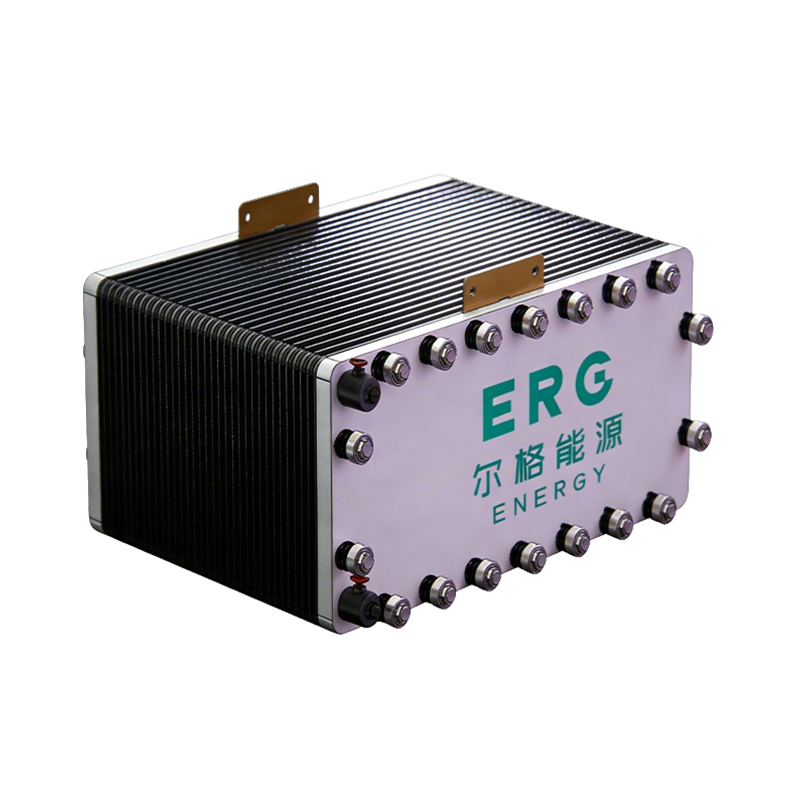
- A cell stack
- Circulation pumps
- A piping system
During operation, the electrolyte is pumped through the stack, where redox reactions occur on the electrode surface to enable charging and discharging.
The most important feature is this:
In a flow battery, power and energy capacity are separated.
What does that mean?
To increase storage capacity in a lithium-ion battery, you usually need more cells. In a flow battery, by contrast, if you want to store more electricity, you mainly need to increase the size of the electrolyte tanks.
That is one reason flow batteries are especially well-suited to large-scale energy storage plants.
Why Have Flow Batteries Suddenly Become Popular
There is one main reason:
The share of renewable energy is rising, and the grid increasingly needs long-duration energy storage.
In the past, most energy storage applications were used for:
- peak shaving
- 1–2 hour load shifting
- emergency backup
But the situation has changed.
As the share of wind and solar power continues to rise, many countries are facing:
- excess power generation during the day
- insufficient supply at night
- power shortages when the wind stops
- greater grid volatility
At this point, 2-hour storage is no longer sufficient.
A new term has emerged in the global energy sector:
Long Duration Energy Storage (LDES)
It generally refers to storage systems lasting:
- more than 4 hours
- more than 8 hours
- more than 10 hours
- or even multi-day storage
Flow batteries are naturally well-matched to this use case.
What Is the Biggest Advantage of Flow Batteries
1. Extremely Long Lifespan
This is one of the core advantages of flow batteries.
Mainstream LFP energy storage systems today typically have a cycle life of around 6,000 to 8,000 cycles.
By contrast, vanadium redox flow batteries can theoretically exceed 20,000 cycles, and some systems are designed for a service life of 20 to 25 years.
They also experience relatively slow capacity degradation over time.
Many lithium-ion storage systems begin to show noticeable performance decline after 8 to 10 years. Flow battery electrolyte can be reused, which makes the technology particularly attractive for long-term fixed-asset projects.
2. High Safety
Flow batteries use aqueous electrolytes.
That means they are:
- less susceptible to thermal runaway
- less likely to catch fire or explode
- much safer than lithium-ion batteries in many stationary applications
Safety has become increasingly important, especially for large-scale energy storage plants.
In recent years, lithium battery fire incidents have occurred in South Korea, the United States, and Europe, prompting many grid operators to reassess non-lithium technology pathways.
3. Especially Suitable for Long-Duration Storage
Lithium-ion batteries are generally very economical for storage applications under 4 hours.
But once storage duration reaches:
- 6 hours
- 8 hours
- 10 hours
the cost of lithium-ion systems rises rapidly.
Flow batteries, however, have a different cost structure because capacity depends mainly on the electrolyte tanks. There is no need to scale the number of battery cells proportionally.
That gives them a clear advantage in long-duration storage scenarios.
Flow Batteries Also Have Clear Weaknesses
If flow batteries are so attractive, why have they not completely replaced lithium-ion batteries?
Because they still have several major drawbacks.
1. High Upfront Cost
This is especially true for vanadium redox flow batteries.
Why?
- vanadium remains relatively expensive as a raw material
- the system architecture is complex
- piping, pumps, and electrolyte management add cost
At present, many flow battery projects still have higher upfront costs than lithium-ion systems.
2. Low Energy Density
Flow batteries are inherently difficult to make compact.
As a result, they are not suitable for:
- Smartphones
- electric vehicles
- portable devices
They are better suited for:
- containerized storage
- grid-scale storage
- commercial and industrial long-duration storage
3. Lower Efficiency Than Lithium-Ion
Current flow battery system efficiency is typically in the range of 65% to 85%.
By comparison, many lithium-ion batteries already exceed 90%.
Once pump losses, thermal management losses, and other auxiliary system losses are included, net system efficiency can be lower still.
Why Is China Strong in Flow Batteries
China has three major advantages at the same time:
1. The World’s Largest Renewable Energy Buildout
China has the world’s largest installed wind and solar capacity.
The higher the penetration of renewable energy, the stronger the demand for long-duration storage.
2. Significant Vanadium Resource Advantages
The most important material for vanadium redox flow batteries is vanadium.
China possesses significant global vanadium resources and a strong industrial supply chain.
3. China Is Building Some of the World’s Largest Flow Battery Projects
For example, the Jimusar project in Xinjiang.
The project scale reaches:
- 200 MW / 1,000 MWh
- It has already entered the GWh scale.
Will Flow Batteries Replace Lithium-Ion Batteries
The answer is unlikely to be yes.
The more likely future is:
| Application | More Suitable Technology |
|---|---|
| 1–4 hour storage | Lithium-ion batteries |
| 4–12 hour long-duration storage | Flow batteries |
| Multi-day storage | Hydrogen / compressed air / other technologies |
The global consensus is becoming clearer:
Lithium-ion batteries are best suited for short-duration, high-frequency use, while flow batteries are better suited for long-duration, stable storage.
They are not direct substitutes for one another. More likely, they will divide the market according to use case.
What Really Determines the Future of Flow Batteries Is Not Technology, But Cost
The underlying technology of flow batteries has existed for many years.
What has truly limited their growth is:
- Cost
- commercialization scale
- supply chain maturity
The global flow battery market is still relatively small, but it is growing quickly.
Available data suggests that:
- the global flow battery market may be around US$600 million in 2025
- it could exceed US$3.1 billion by 2033
- with a compound annual growth rate above 23%
Vanadium redox flow batteries still account for the majority of the market.
Conclusion
There is a familiar pattern in the energy industry:
Many technologies do not take off when they become technically mature. They take off when the market finally needs them.
Flow batteries are a classic example.
For the past decade, they have existed in the background without becoming mainstream. Now, as renewable energy penetration rises and grids need more long-duration storage, their strategic importance is increasing rapidly.
They may not become as widely deployed as lithium-ion batteries, but in future large-scale storage, grid balancing, and long-duration energy storage applications, flow batteries are likely to play a growing role.
PREV:How Does a Safe Energy Storage System Ensure Long Term Safety Stability
NEXT:How Does Flow Energy Storage Battery Work in Real Energy Systems
NEXT:How Does Flow Energy Storage Battery Work in Real Energy Systems
Interested in cooperation or have questions?

Product
Content
+86-576-83200088
No. 2, Yongxing Road, Hairun Street, Sanmen County, Zhejiang Province
Copyright © Zhejiang ERG Energy LLC. All Rights Reserved.

Customized Flow Battery ODM Services for Global Energy Storage Market