 English
 中文简体
中文简体
How Does the Flow Battery Working Principle Improve Energy Storage
How Does the Flow Battery Working Principle Improve Energy Storage
How Does the Flow Battery Working Principle Improve Energy Storage
How Does the Flow Battery Working Principle Improve Energy Storage
How Does the Flow Battery Working Principle Improve Energy Storage
How Does the Flow Battery Working Principle Improve Energy Storage
How Does the Flow Battery Working Principle Improve Energy Storage
How Does the Flow Battery Working Principle Improve Energy Storage
How Does the Flow Battery Working Principle Improve Energy Storage
How Does the Flow Battery Working Principle Improve Energy Storage
How Does the Flow Battery Working Principle Improve Energy Storage
How Does the Flow Battery Working Principle Improve Energy Storage
How Does the Flow Battery Working Principle Improve Energy Storage
How Does the Flow Battery Working Principle Improve Energy Storage
How Does the Flow Battery Working Principle Improve Energy Storage
How Does the Flow Battery Working Principle Improve Energy Storage

Product Category
NEW Category
How Does the Flow Battery Working Principle Improve Energy Storage
Why Energy Storage Design Matters Today
Why are industries and energy developers paying closer attention to battery architecture rather than only capacity numbers? As power demand patterns become more complex, the way a battery is designed directly affects how it performs in long-duration storage, grid support, and industrial applications.
Modern storage solutions, such as High-Safety Energy Storage Battery systems,s are developed to operate under varying environmental and load conditions. Among these, flow batteries have gained attention because their structure separates energy storage from power generation, offering a different approach compared to conventional batteries.
What Is a High-Safety Energy Storage Battery
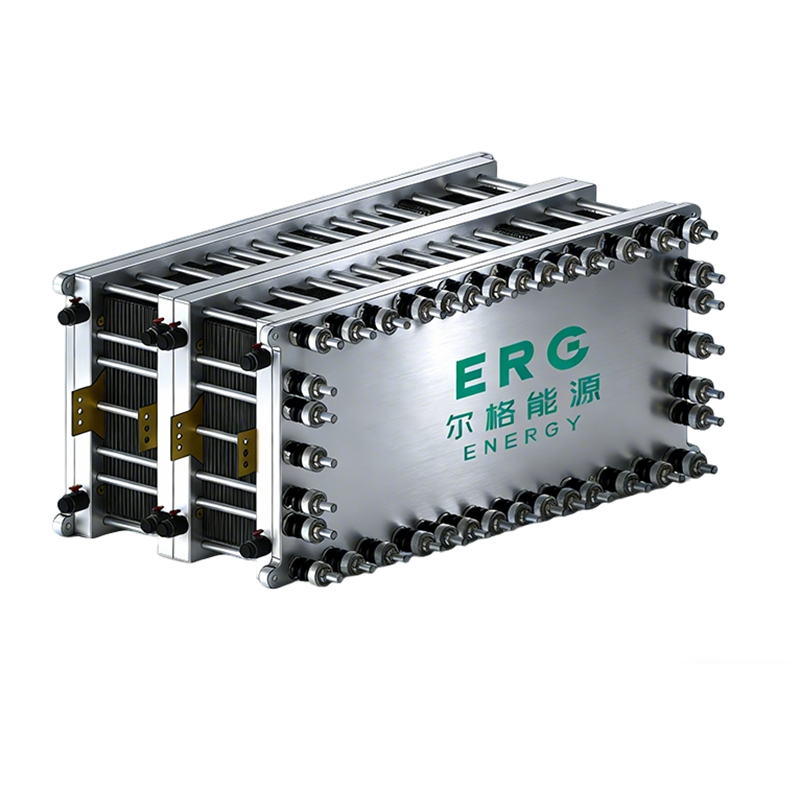
A High-Safety Energy Storage Battery refers to an energy storage system designed with stable operation and controlled energy behavior in mind. Instead of concentrating all energy inside a compact internal structure, these systems often distribute energy across external components.
In flow battery systems, electrolytes are stored in separate tanks and circulate through a cell stack. This architecture helps reduce internal stress and allows thermal conditions to remain more manageable during operation.
Another question often raised is how this design contributes to operational stability. The answer lies in the separation of energy storage and electrochemical reaction zones, which allows each part of the system to function independently while remaining connected through circulation loops.
How Does a Non-Flammable Battery Work
What makes a Non-Flammable Battery different from conventional battery systems? The key lies in the type of materials used and how energy is stored.
In many flow battery designs, the electrolytes are water-based solutions containing dissolved active species. These liquids circulate through the system and undergo electrochemical reactions during charging and discharging.
Because the system avoids highly concentrated reactive materials in a confined solid structure, it behaves differently from batteries that rely on compact internal energy density. This contributes to its classification as a Non-Flammable Battery in various engineering contexts.
In addition, the external storage of electrolytes means that energy is not tightly packed into a single enclosed cell. Instead, it is distributed across tanks and piping systems, which allows for more controlled operation and easier monitoring of system conditions.
What Is the Flow Battery Working Principle
How does the Flow Battery Working Principle actually function in practice?
Flow batteries operate by circulating liquid electrolytes between storage tanks and a cell stack. These electrolytes contain chemical species that undergo reversible redox reactions. During charging, electrical energy is used to drive chemical changes in the electrolyte. During discharging, these chemical changes are reversed to produce electrical energy.
The process can be summarized as a continuous cycle:
- Electrolytes are pumped from storage tanks into the cell stack
- Ion exchange occurs through a membrane separating the two electrolyte streams
- Electrons flow through an external circuit to generate electricity
- Electrolytes return to their tanks for reuse
This circulation-based operation is what defines the Flow Battery Working Principle, making it distinct from static battery systems where reactions occur within sealed cells.
How Do Flow Batteries Store Energy
How is energy actually stored in a flow battery system?
Energy is stored in the chemical composition of the electrolytes. When the battery is charged, electrical energy drives reactions that alter the oxidation states of the dissolved species. These changes represent stored chemical energy.
Unlike traditional batteries, where energy is tied to electrode materials inside the cell, flow batteries store energy externally in liquid form. This means that increasing storage capacity often involves expanding the volume of electrolyte rather than modifying the cell stack.
The storage process includes:
- Chemical transformation of the electrolyte during charging
- Retention of energy in the altered chemical state
- Reversal of reactions during discharge to release energy
This approach allows the system to maintain consistent operation over extended cycles while keeping energy storage physically separated from the reaction site.
What Is a Vanadium Redox Flow Battery VRFB
What makes a Vanadium Redox Flow Battery (VRFB) different from other flow battery types?
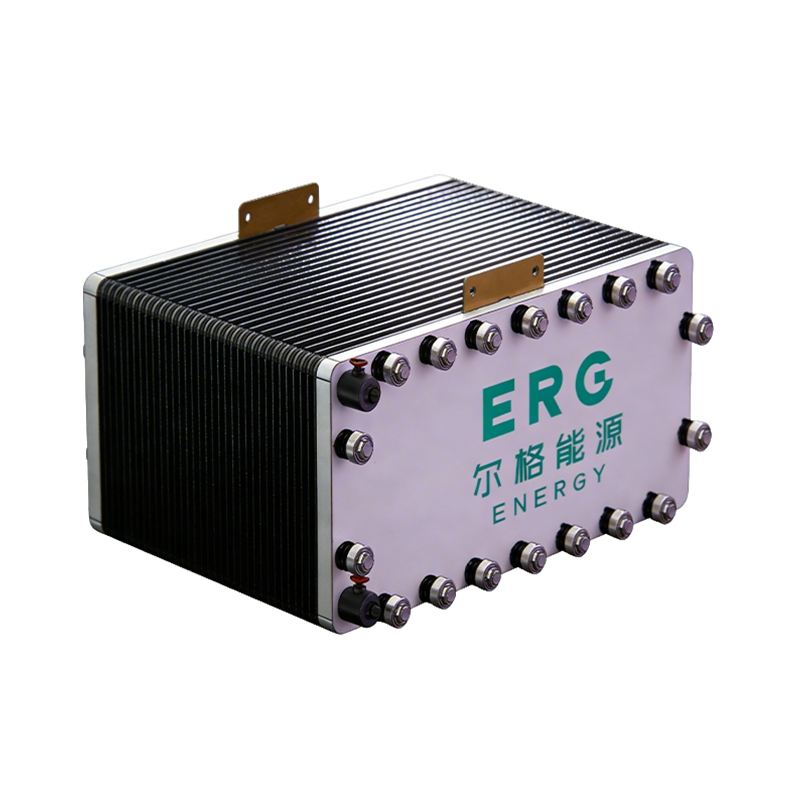
A VRFB uses vanadium ions in multiple oxidation states as the active materials in both the positive and negative electrolytes. Because the same element is used on both sides, the risk of cross-contamination is reduced, and the chemical behavior remains more consistent over repeated cycles.
In a VRFB system, two separate electrolyte solutions are stored in external tanks. Each solution contains vanadium ions in different states. During operation, these electrolytes flow through the cell stack where redox reactions occur across a membrane.
The Flow Battery Working Principle is clearly demonstrated in VRFB systems through the reversible movement of ions and electrons. The system converts electrical energy into chemical energy during charging and reverses the process during discharging.
Another important characteristic is that VRFB systems allow energy capacity to be adjusted by changing the volume of electrolyte stored. This decoupling of energy and power provides flexibility in system design for different application needs.
Why Are Flow Batteries Used in Industrial and Grid Applications
Why are High-Safety Energy Storage Battery systems like flow batteries increasingly used in large-scale applications?
One reason is their ability to support long-duration energy storage. Since energy capacity depends on electrolyte volume, systems can be scaled according to project requirements.
Another reason is their compatibility with Non-Flammable Battery characteristics. The use of liquid electrolytes and external storage tanks allows for controlled operation across different environments.
In addition, flow batteries align well with systems that require stable and repeatable cycling. The Flow Battery Working Principle supports continuous operation without the same degradation patterns seen in some solid-state battery systems.
These features make them suitable for applications such as renewable energy integration, load balancing, and industrial energy management, where consistent performance and flexible scaling are important considerations.
Additional Operational Advantages of Flow Battery Systems
Enhanced System Monitoring and Control
Flow battery systems allow real-time monitoring of electrolyte flow rates, temperature, and chemical conditions. Because the electrolytes circulate through external pipelines, operators can integrate sensors at multiple points to track system performance more accurately. This level of visibility supports predictive maintenance and helps maintain stable operation over long periods.
Reduced Risk Through System Separation
The physical separation between the electrolyte storage and the electrochemical reaction area further enhances operational safety. In the event of localized issues within the cell stack, the impact is contained and does not immediately affect the entire energy storage volume. This structural characteristic reinforces the overall resilience of the system and supports its role as a High-Safety Energy Storage Battery solution.
PREV:How Reliable Is a Backup Power Supply in Modern Systems?
NEXT:How Factories Peak Shaving And Valley Filling Save Power Costs?
NEXT:How Factories Peak Shaving And Valley Filling Save Power Costs?
Interested in cooperation or have questions?

Product
Content
+86-576-83200088
No. 2, Yongxing Road, Hairun Street, Sanmen County, Zhejiang Province
Copyright © Zhejiang ERG Energy LLC. All Rights Reserved.

Customized Flow Battery ODM Services for Global Energy Storage Market